Edward Curtis Quotes
That we shall regard with deep regret the continuance of the excitement at the South, as far as it may be occasioned by the apprehension of danger from the exertions of a few misguided abolitionists in our community
It passed easily. Although the Whigs were the opposition party to the slavery-oriented Democrats, they did not oppose slavery. See {613981} for another example. This left an opportunity for the Republicans to form a third party and succeed.
Edward Curtis, 1801-1856, U. S. Congressman (Whig, NY), Resolution he submitted to a New York City political meeting
Sourced by: Eigen's Political and Historical Quotations

pointing to a full length portrait of Washington, This point of view was typical of the Whig position, the supposed opposition to the Democrats who favored slavery. The abolitionists and radicals had no where to go politically and that gave the opening for the Republican Party. Abraham Lincoln, for example, was a Whig and joined the new radical Republicans.

In June of 1850, a bipartisan group of Southern politicians met in Nashville, TN for the purpose of organizing strategy and tactics to ward off and defeat the growing aggressiveness of Northern politicians and other leaders in trying to abolish slavery. They issued an address to the people. This is one of the clearest statements of the position of most of the Southern Politicians on the increased efforts to abolish or curtail slavery.

While England was strongly opposed to slavery, the English textile industry benefited from importing American Southern cotton. So many in England were supportive of the Confederacy.

There indeed were although the Southerners tended to exaggerate the numbers. However, the more slavery was debated, the more many of the abolitionists came to believe that insurrection and slave rebellion was not only morally justified but was the only recourse that was left by the racist intransigence of the Southern slave holders and politicians.


The highest court in New York.

The last lines of the editorial were tragically accurate in predicting the Civil War. The more the slavery question was debated in the nation, the more polarized the country became. If the South would persist in trying to curtail men’s freedom and maintain slavery, the slaves had the same right of revolution and insurrection as was established in the American Revolution. That was the view of most abolitionists. Southern slave holders, feared an armed slave rebellion more than anything else, and observed that debating the issue of slavery was just riling up Blacks and whites and would instigate such armed revolutions. The Southern solution was to cease debating the slavery question. The Northern solution was to end slavery. Neither side would accept the solution of the other and the Civil War ensued.
Providence, a large shipping center, not only shipped Southern Cotton, but was the home port of some of the major slave traders who brought and sold slaves to the South.


Buchanan us considered by most historians to have been the worst or one of the worst Presidents of the United States. At this point, he was a lame duck president with Abraham Lincoln, the President Elect soon to take office. This speech, just encouraged the South more than ever and helped to bring about the Civil War. His vacillation and lack of any leadership on the slavery question exacerbated the polarization that was tearing the nation apart.
The reason for secession was the threat to slavery, which was a great threat to the slave-owners of the South. However, the non slave-owners had a very strong vested interest in maintaining slavery in that most Southerners had been brought up with such a negative view of Blacks that they were paranoid of Black equality or even worse some Blacks in positions of authority over whites. At the time, it was the Republican Party that was the advocate for minority equality and the Democratic Party embraced the racists. The parties would flip flop after the Civil Rights Act of 1964 ending legal segregation was passed by a Democratic President and a Democratic Majority Congress.

It was in fact, the following year when the South rebelled to prevent a “settlement”, but the irony was that the Civil War brought the settlement—emancipation-- faster and on less favorable terms than had they not rebelled and let the political process end slavery gradually as the majority of the nation wanted and morality dictated.


The nation in 1848 was very polarized over the issue of slavery. Taylor, never even mentioned the subject in his speeches and writings. He reused to answer any questions about the subject or indicate his own views. His strategy worked as the other politicians who took a stand—either way—alienated a large number of voters.


Sumner was sharp and biting in his criticism of slavery and its supporters. Preston Brooks, a South Carolina Democrats, soon after, sneaked up on Sumner and trapped him in his desk bolted to the floor. Sumner was seriously injured; Brooks, lauded throughout the South.


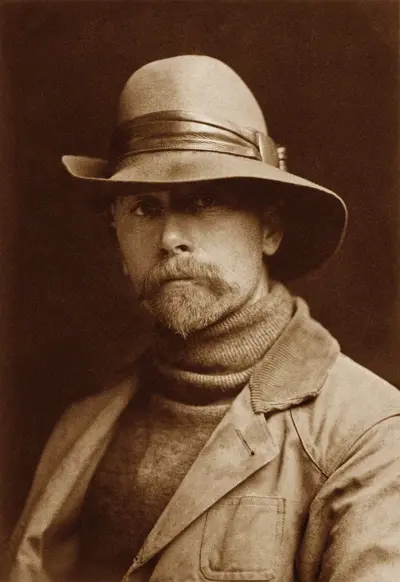
- Born: February 19, 1868
- Died: October 19, 1952
- Nationality:
- Profession: Photographer, Ethnologist
Edward Sheriff Curtis was an American photographer and ethnologist whose work focused on the American West and on Native American people.
