John Brown Quotes
You had better — all you people at the South — prepare yourselves for a settlement of this [slavery] question, that must come up for settlement sooner than you are prepared for it.
It was in fact, the following year when the South rebelled to prevent a “settlement”, but the irony was that the Civil War brought the settlement—emancipation-- faster and on less favorable terms than had they not rebelled and let the political process end slavery gradually as the majority of the nation wanted and morality dictated.
John Brown, 1800-1859, Abolitionist, Response to Southern Senator Mason, Hearing, October 19, 1859
Sourced by: Eigen's Political and Historical Quotations


While England was strongly opposed to slavery, the English textile industry benefited from importing American Southern cotton. So many in England were supportive of the Confederacy.

The first anti-slavery newspaper published in the United States & the first journal in America to advocate immediate, unconditional emancipation

Lincoln presciently wrote this statement in 1858, for he would be assassinated on April 14, 1865, eight months prior to the final ratification of the 13th Amendment.

For more about the Bureau. See {629185}.and {629187}.
Lincoln later changed his mind about Colonization when some Black leaders pointed out that the Blacks had built a large part of America and also survived slavery, it they were given fair opportunity, there was no reason that they would not be able to compete and thrive.

It, would automatically emancipate all children born to slaves thereafter. It did not pass. The quote is given as evidence of Jefferson’s attempts to eliminate slavery but is in marked contrast to the fact that he never freed his own slaves nor emancipated slave children (including possibly his own child with his slave Sally Hemmings). In addition, compare this with {629765} and {630991}.

This was not an original notion with Abraham Lincoln. Seward and most of the “Radical Republicans” believed that the slavery issue had to be resolved and attempts to compromise were futile.

The highest court in New York.


The Act was passed by the Pennsylvania General Assembly whose clerk interestingly enough was Tom Paine.

These lines were quoted by W. E. B. Dubois in his The Souls of Black Folk, 1905

This quotation is very interesting historically. Despite the fact that Washington DC was a thoroughly racially segregated city, and the Southern racists controlled much of Congress, Blacks as well as whites were welcome in the Congressional galleries, and they attended many debates. Slavery and equality were not just debated in the 1850s but the issue was in constant friction from the earliest Congress.

Lincoln, just before the Civil War, quoted Jefferson that if slavery were not ended in America the results would be disastrous. But Lincoln at the time probably did not imagine how right Jefferson was, and Jefferson himself probably 1 how terrible the Civil War would be.
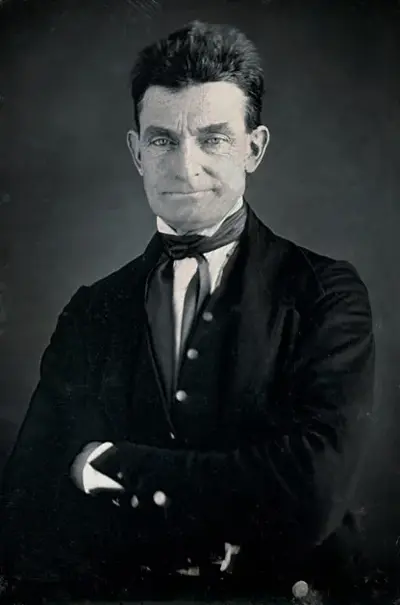
John H. Brown was an American abolitionist leader. Brown felt that violence was necessary to end American slavery, as years of speeches, sermons, petitions, and moral persuasion had failed.
