Harold J. Laski Quotes
That industries like coal and electric power, transport and banking, the supply of meat and the provision of houses, should be left to the hazards of private enterprise will appear as unthinkable to a future generation as it is unthinkable to our own that the army of the State should be left to private hands.... That does not mean direct operation by government .... It means the planning of constitutions for essential industries.
Harold J. Laski, 1893-1950, English Political Scientist, A Grammar of Politics, 1925
Sourced by: Eigen's Political and Historical Quotations

The founder was Charles E. Coughlin, 1891-1979, a demagogic Catholic Priest who drafted the principles and invited others to join him. Hundreds of thousands did in this organization which began in idealism, and ended in scandal and hate mongering, so much so that Father Coughlin was ordered off the radio and out of politics by the Catholic Church. The National Union in 1936 had morphed into the Union Party which ran Presidential candidates in the 1936 election. The Coughlin and the Union were a mixture of Fascist and Socialist principles. The prohibition of private ownership of banks and utilities was one of the radical socialist notions.

This is a very interesting quotation in that right wing parties are usually opposed to any kind of Government ownership and control of business and industry. However, Fascist parties have usually wanted to commandeer business and industry for the central purposes of the dictatorial state. The French National Front Party had its roots in the WWII French Vichy Government—which was allied with the Nazis to bring Fascism and racism to France.


The first part of this quotation has defined the attitude of most Americans towards private enterprise and government since then. The second part of the quotation—the undesirability of public ownership of railroads has given way to the modern problem that no passenger railroad can be operated profitably by anyone—private or public. So Roosevelt’s “far-reaching disaster” was finally complete with the Federal Government taking over responsibility for Amtrack.


Some economic conservatives see little or no role for government. For many of them, in a free market there is no role for government. This quotation, from one of the economic heroes of the conservatives, shows that he not only saw a role for government, but believed that government was essential to the operation of a free market.

Virtually every advance for the working class in England (and the other countries including America) was labeled “socialism” by the conservative economic factions of the time. However, socialists were strong advocates of all these economic reforms and even in the 19th century their impact was recognized.


1st Viscount Snowden. Nationalization is when a nation or state determines that certain industries of areas of the economy should be reserved for the government to operate. Private companies, if they have been operating a nationalized industry losse their rights to continue in that business and may even lose their physica assets in which case th form is supposed to be paid a fair price. In 21st century America we have very few nationalized industries. One of these is the manufacture of nuclear weapons. Communist counties have many if not most of the economy nationalized. From the 19th century socialism has evolved from a belief that most people will best be served by nationalization of most of th major economic functions. However, over time this did not meet Socialism’s other objectives and nationalism became less popular with socialists. Snowden, a leading socialist, wanted to get rid of the concept entirely, and today there are very few situations where there are calls for nationalis. Even the few remaining communist nations are privatizing (the opposite of nationalizing) some of their economy.
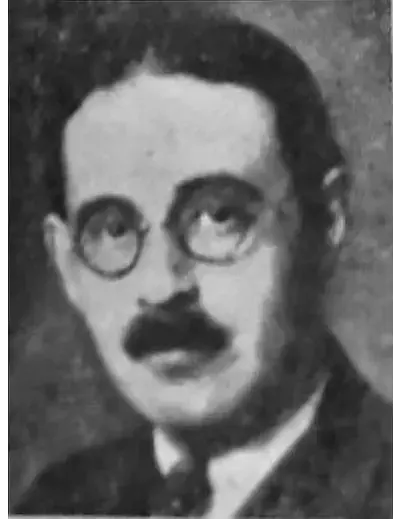
Harold Joseph Laski was an English political theorist and economist. He was active in politics and served as the chairman of the British Labour Party from 1945 to 1946 and was a professor at the London School of Economics from 1926 to 1950. He first promoted pluralism by emphasising the importance of local voluntary communities such as trade unions. After 1930, he began to emphasize the need for a workers' revolution, which he hinted might be violent. Laski's position angered Labour leaders who promised a nonviolent democratic transformation. Laski's position on democracy threatening violence came under further attack from Prime Minister Winston Churchill in the 1945 general election, and the Labour Party had to disavow Laski, its own chairman.
