Peter Kropotkin Quotes
Socialist forms of life could find a much easier realization than through the seizure of all industrial property by the State, and the State organization of agriculture and industry.
Peter Kropotkin, 1842-1921, Russian Prince and Anarchist, The Conquest of Bread, 1913
Sourced by: Eigen's Political and Historical Quotations


1st Viscount Snowden. Nationalization is when a nation or state determines that certain industries of areas of the economy should be reserved for the government to operate. Private companies, if they have been operating a nationalized industry losse their rights to continue in that business and may even lose their physica assets in which case th form is supposed to be paid a fair price. In 21st century America we have very few nationalized industries. One of these is the manufacture of nuclear weapons. Communist counties have many if not most of the economy nationalized. From the 19th century socialism has evolved from a belief that most people will best be served by nationalization of most of th major economic functions. However, over time this did not meet Socialism’s other objectives and nationalism became less popular with socialists. Snowden, a leading socialist, wanted to get rid of the concept entirely, and today there are very few situations where there are calls for nationalis. Even the few remaining communist nations are privatizing (the opposite of nationalizing) some of their economy.


This book became the basic English textbook on socialism. Astoundingly, it sold over 2 million copies at a time when few books other than the Bible ever sold in that quantity. The fact that it was so popular alarmed many of the more conservative politicians of the day.


This was the basic document issued after the Russian Revolution establishing the basic legal and economic structure of the new Soviet State.


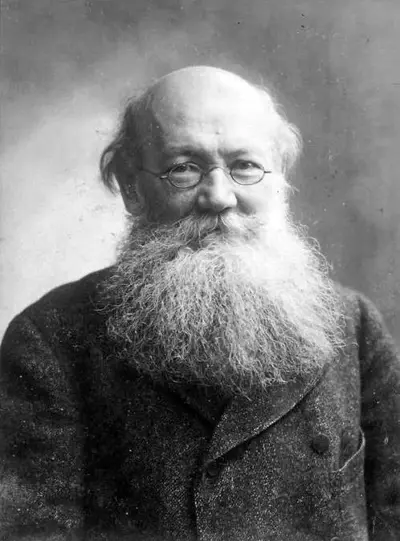
Pyotr Alexeyevich Kropotkin was a Russian anarchist, socialist, revolutionary, economist, sociologist, historian, zoologist, political scientist, human geographer and philosopher who advocated anarcho-communism. He was also an activist, essayist, researcher and writer.
