Ignatius Donnelly Quotes
The telegraph and telephone, like the post-office system, being a necessity for the transmission of news, should be owned and operated by the government in the interest of the people.
Ignatius Donnelly, 1831-1901, U. S. Congressman (Republican, MN), Lt. Governor of Minnesota, Populist Party Platform, 1892
Sourced by: Eigen's Political and Historical Quotations


The founder was Charles E. Coughlin, 1891-1979, a demagogic Catholic Priest who drafted the principles and invited others to join him. Hundreds of thousands did in this organization which began in idealism, and ended in scandal and hate mongering, so much so that Father Coughlin was ordered off the radio and out of politics by the Catholic Church. The National Union in 1936 had morphed into the Union Party which ran Presidential candidates in the 1936 election. The Coughlin and the Union were a mixture of Fascist and Socialist principles. The prohibition of private ownership of banks and utilities was one of the radical socialist notions.


Washington DC to Baltimore. While Morse is remembered as a pioneering inventor. What is not remembered is that Morse could not find private backing for his invention. However, in a midnight session of Congress in 1843, $30,000 was appropriated to build the first magnetic telegraph. Morse sent this first message from the U. S. Capitol building. In a way the telegraph was a precursor to the Internet which while conceived of by private citizens had to be initially funded by the Government.


One of the great scientists of all time was totally wrong when it came to predicting the practical utility of the technological developments of science. In all fairness to Kelvin, once he had actually tried the new technologies, he became a great enthusiast for them and helped introduce them to the world.

Ironically the far right wing Fascists and the far left wing Communists agreed on this point: nationalization.


This is a very interesting quotation in that right wing parties are usually opposed to any kind of Government ownership and control of business and industry. However, Fascist parties have usually wanted to commandeer business and industry for the central purposes of the dictatorial state. The French National Front Party had its roots in the WWII French Vichy Government—which was allied with the Nazis to bring Fascism and racism to France.

It took a while but radios and TVs were produced in portable versions, and of course now we have Wi Fi, the Internet and Smart Phones and Tablets. Tesla was one of the great American immigrant scientists. He found in America the kind of intellectual and operational freedom that did not exist in the rigid, monarch-controlled, Austro-Hungarian Empire. He developed patents and techniques that formed the technological bases of radio, telephone long distance, TV, cell phones, Wi Fi, just to name a few. Most important he was Thomas Edison’s great nemesis. Edison invented DC electric generators that could power factories or entire streets in a neighborhood. Tesler invented and developed AC electrical technology which could power entire cities and he could move electricity over long distances which Edison could not. Tesler was one of the first scientists to conceive of and try to implement “Big Science” where there were huge capital investments to develop machines and systems to do what had never been done before—philosophically like the CERN Hadron Collider. Tesler even convinced a large corporation to finance the construction of a massive building and tower so he could experiment with the wireless transmission of electricity. However, as the industrial democracies have learned, Big Science can only be funded by governments and it often takes sever working in consort to afford the huge investment that is required. In Tesler’s era, the federal and state governments did not fund scientific research so his work was not only technically ahead of his time but also conceptually. He anticipated most of the problems and need for a national power grid that was challenging America even at the beginning of the 21st century.


The Catholic view on the subject varied from time to time, even with the same Pope. See {638558} for another quote from this Pope that gives a different point of view.


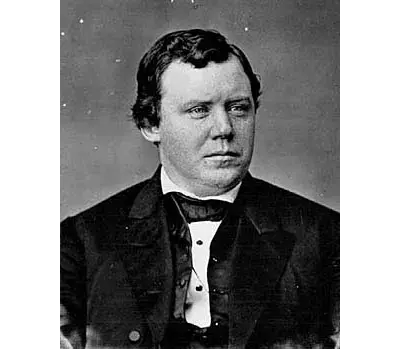
Ignatius Loyola Donnelly was an American Congressman, populist writer, and amateur scientist. He is known primarily now for his fringe theories concerning Atlantis, Catastrophism (especially the idea of an ancient impact event affecting ancient civilizations), and Shakespearean authorship, which many modern historians consider to be pseudoscience and pseudohistory. Donnelly's work corresponds to the writings of late-19th and early-20th century figures such as Helena Blavatsky, Rudolf Steiner, and James Churchward.
