Adam Gopnik Quotes
“Student strike” has the same sort of emotional appeal to the French as “family farm” has in America.
Adam Gopnik, Journalist and Writer, C-SPAN October 20, 2001
Sourced by: Eigen's Political and Historical Quotations

of the Civil Rights Movement


25,000 mill workers went on strike in one of the largest strikes in America at the time.


Although he had majority support, he reacted very badly to anyone who challenged him or his party about anything. One of his decisions to transform a park into a shopping center drew crowds of peaceful protesters. He grossly overacted as he believed in a “winner take all” view of democracy. So long as he could bring more followers than the protesters, he was right and they were wrong. This had the effect of polarizing a population that had been a democracy since the 1920s. In his view, dialogue, discussion, and debate are not valuable processes, and minority views can never be correct, but whoever can muster the majority gets to call the shots and make all the laws and decisions, regardless of the views of minorities.

This quotation was documented by an FBI illegal wiretap of King and his associates. The illegal wiretap had been insisted upon by FBI Director J. Edgar Hoover who was a racist and somewhat of a paranoid about communists. However, Attorney General, Robert F. Kennedy personally approved the illegal wiretap.

He was forgiving them after his troops had killed some protesters the previous “Bloody Sunday” just for protesting their working conditions. See {613674} for how callous he was regarding demonstrators.

The rate and intensity of the anti-nuclear power movement in Japan had slowed somewhat from the peak after the meltdown and catatostrope of Fuklishima. Professor Nakano was asked if this meant the end of popular social action regarding nuclear popwer.


3rd Viscount Palmerston. Julius Jacob von Haynau, 1786–1853, was a vicious Austrian General who had committed many atrocities in Italy and Hungary which today would be considered War Crimes and Crimes Against Humanity. He even had women publicly flogged who were heard saying anything sympathetic about the freedom fighters who the General suppressed brutally. On a visit to London, he was attacked and beaten by draymen at the Barclay & Perkins brewery, which he was visiting. (When Giuseppe Garibaldi came to England in 1864, he insisted on visiting the brewery to thank "the men who flogged Haynau.") The Austrian government complained to Queen Victoria about his treatment and the quotation is from the Foreign Minister’s letter reporting the facts to the queen. A letter of apology was sent by Temple to Austria, but it was worded in such a way that it was clear that the English government felt that the beating should never have taken place but it was not morally unjustified. This even angered the Austrians more. Haynau was known and despised by military men the world over. See {630983} for an American use of Haynau’s name.

Louis Napoleon had seized control of France and had very little popular support amongst the aristocracy and middle class. However, the Socialists leading the uprisings frightened them more than Louis Napoleon as the Socialists had the support of the peasants who resented the abuses of the aristocracy and many of the middle class. This was true class warfare and not at all what was possible in the United States when American conservatives would claim “class warfare” when there was a move for more progressive taxation. In Europe, class warfare really meant death and destruction, so for many who knew the history, the claim of “class warfare” was frightening and a large part of the “Red Scare” in the United States.

Note that at the time feminism was classified with the other “radical”, dangerous isms. Also, many people just did not take any of these movements seriously. The perception was that the advocates were mentally unbalanced.


Lowery was one of the senior Black leaders in the civil rights movement of the late 1950s and early 1960s. In this interview, he was describing the atmosphere in Mobile, Alabama. Clergy of most faiths were active in the Civil Rights Movement in the South with the exception of the Roman Catholic Church which was very institutionally conservative. The Catholic leaders had a problem in that Catholics had been heavily discriminated against in early America and this prejudice was heaviest in the South in the 20th century. They feared that Catholic Activism against the status quo would create more problems for Catholics so they were not very helpful or supportive. This was NOT true for Catholics in general. Many individual Roman Catholics marched in the demonstrations, and some Catholic clergy from outside of the South came to the Southern protests and demonstrations. In the 20th century, the Catholic Church was divided between social activist reformers and in some cases revolutionists and the conservative wing of the Church who had supported the status quo.
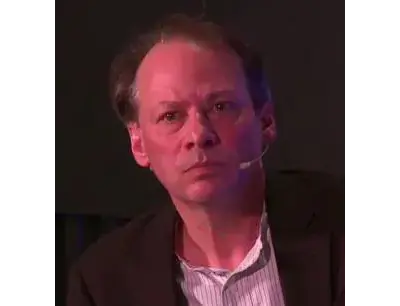
Adam Gopnik is an American writer and essayist. He is best known as a staff writer for The New Yorker, to which he has contributed non-fiction, fiction, memoir and criticism since 1986.
