Koichi Nakano Quotes
People have to carry on with their lives, so only so much direct action can take place. Anti-nuclear activism may look dormant from appearances, but it’s there, like magma. It’s still brewing, and the next trigger might be another big protest or political change,
The rate and intensity of the anti-nuclear power movement in Japan had slowed somewhat from the peak after the meltdown and catatostrope of Fuklishima. Professor Nakano was asked if this meant the end of popular social action regarding nuclear popwer.
Junichiro Koizumi, Interview with Motoko Rich, The New York Times, Jabuary 1, 2017
Sourced by: Eigen's Political and Historical Quotations

He was speaking from retirement. When he was Prime Minister--2001-2005, and active politically, he was in favor of nuclear power for Japan. But after the meltdown of the reactors at Fukishima, he saw happening exactly what the corporation executives running the nuclear power told him could never happen. He aslo supported the claims of American Sailor who had provided much help in the nuclear emergency that they were suffering from deseases brought on by teh excessibe radiation that they encountered.
Corporations in the nuclear business argue that Nuclear power is less expensive than otehr forns of ower that are in common use. However, when a nation adds the huge cost of maintianing a scientific infrastructure to inspect and regulate the nuclear power plants, and the costof establishing the contingency capability of popularion evacuation and containment when there is a nuclear accident, and then the cost of safely stopring and containing the spent but deadly radioactive fuel, the incredibly high cost of insurance, then it is clear that nuclear power is the most expensive form of power. However, some countries do it better than others with France being the only country at the beginning of the 21st century that operated nuclear power safely and efficiently. The United States, Russia and Japan had huge costs


This quotation was documented by an FBI illegal wiretap of King and his associates. The illegal wiretap had been insisted upon by FBI Director J. Edgar Hoover who was a racist and somewhat of a paranoid about communists. However, Attorney General, Robert F. Kennedy personally approved the illegal wiretap.
This quotation was documented by an FBI illegal wiretap of King and his associates. The illegal wiretap had been insisted upon by FBI Director J. Edgar Hoover who was a racist and somewhat of a paranoid about communists. However, Attorney General, Robert F. Kennedy personally approved the illegal wiretap.


He was jailed for the speech.


Although he had majority support, he reacted very badly to anyone who challenged him or his party about anything. One of his decisions to transform a park into a shopping center drew crowds of peaceful protesters. He grossly overacted as he believed in a “winner take all” view of democracy. So long as he could bring more followers than the protesters, he was right and they were wrong. This had the effect of polarizing a population that had been a democracy since the 1920s. In his view, dialogue, discussion, and debate are not valuable processes, and minority views can never be correct, but whoever can muster the majority gets to call the shots and make all the laws and decisions, regardless of the views of minorities.


During the meltdown of the Japanerse nuclear reactors at Fukashima, American sailors were deployed to provide critical assistance fram an American aircraft carrier in the area. They played a significant role in getting the reactors under control. Many of the Japanese at the emergency area had suffered serious illness from the radiation exposure abd a number died. The crew of the aircraft carrier had developed a highly unusual prevelance of serious illness assocated with radiation exposure. The U. S. Defense Department was "styding the matter" but had not decided that the unusual illness patern was related to their assignment assisting in th emergency. A number of the sailors had come to japan and asked for damages from the Raactor company which like most American Corporations would not do or say anything. The Japanese government also was silent on the issue when the sailors came to Japan, However, this former prime minister felt so strongly that he visited the Sailors and took up their cause in letting the Japanese public know what had happened and how the government and the electic company were acting. This was Koizumi's tearful response to the press covering the saolors and their request.

There had been so much nuclear activity—military and civilian—that he thought it inevitable, either by intention or accident, that there would be some catastrophes. Chernobyl and the crash of a nuclear bomb equipped plane in Spain destroyed the two areas for years thereafter proved him prescient but fortunately none of the “incidents” were bad enough to affect millions of people significantly although the damage of Chernobyl is still being discovered.
King and his associates along with a large number of students were arrested for protesting racial discrimination in Selma. The Chief of police was told that this is just what King wanted. His was a deliberate attempt to get publicity by arresting and prosecuting a group of ministers and school children. So Chief Baker told King that they were not under arrest. So King went outside the jail where many journalists had congregated, hastily called a press conference, and publicly admitted to deliberately drawing attention to the conditions.

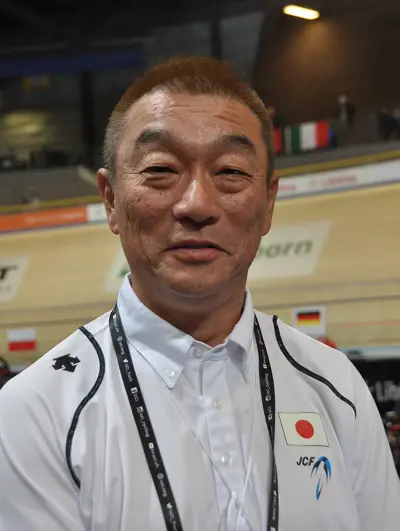
Koichi Nakano is Professor of Political Science at the Faculty of Liberal Arts, Sophia University. He specializes in the comparative politics of advanced industrial democracies, particularly Japan and Europe, and in political theory. He has a B.A. in philosophy from the University of Tokyo, a second B.A. in philosophy and politics from the University of Oxford, and an M.A. and a Ph.D. in politics from Princeton University. His research has focused on a variety of issues of contemporary Japanese politics from comparative, historical, and philosophical perspectives, including neoliberal globalization and nationalism; the Yasukuni problem; language, media and politics; amakudari and administrative reform in Japan; decentralization; the cross-national transfer of policy ideas; and a review of the DPJ government. In English, he has published articles in The Journal of Japanese Studies, Asian Survey, The Pacific Review, West European Politics, Governance, and a single-authored book entitled Party Politics and Decentralization in Japan and France: When the Opposition Governs (Routledge, 2010) among others. In Japanese, his publication includes Sengo Nihon no Kokka Hoshushugi: Naimu/Jichi Kanryo no Kiseki (Postwar State Conservatism in Japan: A Study of the Bureaucrats of the Ministry of Home Affairs) (Iwanami Shoten, 2013). He has also frequently commented on Japanese politics for the international and Japanese media, including BBC, CNN, Reuters, AP, The Economist, Wall Street Journal, Le Monde, ABC, The Australian, and BS Fuji.
