Daniel Webster Quotes
Standing armies are the oppressive instruments for governing the people.
Daniel Webster, 1782-1852, U. S. Congressman (Federalist, NH & MA) & U. S. Senator (Federalist & Whig, MA), June 17, 1843
Sourced by: Eigen's Political and Historical Quotations

This size standing army which alarmed so many at the beginning of the 20th century, looked very small when compared with the standing army of America a century later. For earlier American Politician’s views on a standing army, see {592824}, {631687}, {622888}, and {641008}.


Describing the proposed U. S. Constitution:


In early America and up to WWII, generally it was the conservatives like Fisher who were opposed to a strong military and many wanted no military at all except in times of war. It was President Dwight Eisenhower who turned the right wing of America into a pro military force.

Originally it was published in Boston under the name “A Columbian Patriot.”


Fremont and some of the Radical Republicans wanted Lincoln immediately to declare the slaves of the rebelling states free. As a major general in charge of an area, he wrote a military order emancipating all the slaves in his jurisdiction. President Lincoln countermanded the order as soon as he found out. He wanted Fremont to only free the slaves whose owners were actively working against the union. Lincoln needed to hold the border states like Maryland in the Union and was working on a plan whereby slave owners who were loyal to the Union would be economically compensated when their slaves were freed. If loyal slaveholders in Fremont’s area would lose their slaves with no compensation, Lincoln feared that the otherwise loyal border states would be driven to the confederacy thus shifting the balance of power. Lincoln had his own plan for emancipation and would not allow Fremont to alter that. As a result of this speech, the Radical Republicans nominated Fremont to run against Lincoln. For a few weeks he looked like he would run, but then he and Lincoln made a deal. Lincoln fired Montgomery Blair, Fremont’s arch enemy, from the cabinet, and Fremont withdrew from the election.

Referring to the Bureau of Alcohol, Tobacco and Firearms:

Fortunately for Turkey and the world, a great Turkish leader, Ataturk, rose up and radically reformed the nation and transformed it to a European style, secular democracy which became the most successful Muslim nation in the world but was under pressure by Ismalists to revert and have more religious control. Ataturk ended the Turkey that TR and others were criticizing.


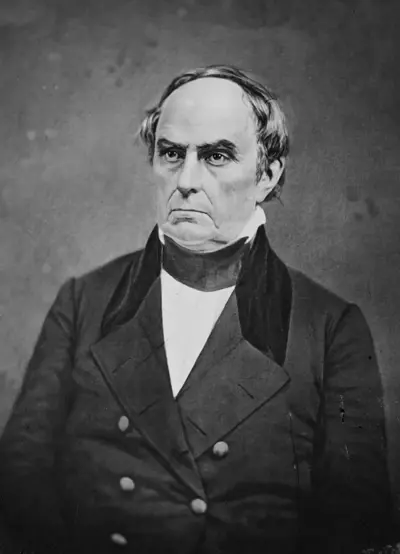
- Born: January 18, 1782
- Died: October 24, 1852
- Nationality: American
- Profession: Statesman
Daniel Webster was an American lawyer and statesman who represented New Hampshire and Massachusetts in the U.S. Congress and served as the U.S. Secretary of State under Presidents William Henry Harrison, John Tyler, and Millard Fillmore. As one of the most prominent American lawyers of the 19th century, he argued over 200 cases before the U.S. Supreme Court between 1814 and his death in 1852. During his life, he was a member of the Federalist Party, the National Republican Party, and the Whig Party.
