William Henry Harrison Quotes
The chains of military despotism, once fastened upon a nation, ages might pass away before they could be shaken off.
Harrison, William Henry. "Inaugural Address, March 4, 1841." Inaugural Addresses of the Presidents of the United States, United States Government Printing Office, 1989.


Describing the proposed U. S. Constitution:


Fremont and some of the Radical Republicans wanted Lincoln immediately to declare the slaves of the rebelling states free. As a major general in charge of an area, he wrote a military order emancipating all the slaves in his jurisdiction. President Lincoln countermanded the order as soon as he found out. He wanted Fremont to only free the slaves whose owners were actively working against the union. Lincoln needed to hold the border states like Maryland in the Union and was working on a plan whereby slave owners who were loyal to the Union would be economically compensated when their slaves were freed. If loyal slaveholders in Fremont’s area would lose their slaves with no compensation, Lincoln feared that the otherwise loyal border states would be driven to the confederacy thus shifting the balance of power. Lincoln had his own plan for emancipation and would not allow Fremont to alter that. As a result of this speech, the Radical Republicans nominated Fremont to run against Lincoln. For a few weeks he looked like he would run, but then he and Lincoln made a deal. Lincoln fired Montgomery Blair, Fremont’s arch enemy, from the cabinet, and Fremont withdrew from the election.

The Fascists almost fulfilled Spengler’s prediction.


He fought in Algeria and other counterinsurgencies and then studied them. He wrote the classic book on counterinsurgency warfare. After all the mistakes the U. S. made after the successful invasion of Iraq, his book and doctrine were very influential in the change in strategy and tactics that turned the Iraq War in our favor.


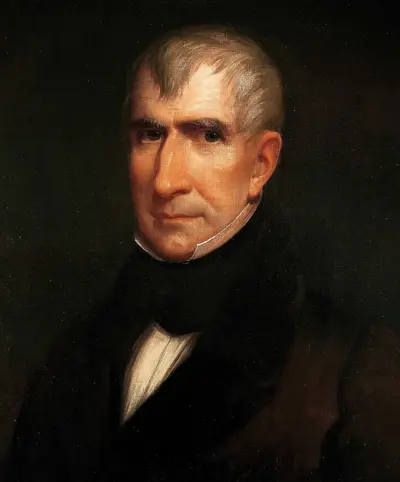
William Henry Harrison was an American military officer and politician who served as the ninth president of the United States for 31 days in 1841, becoming the first president to die in office and the shortest-serving U.S. president in history. His death sparked a brief constitutional crisis regarding succession to the presidency.
