Mercy Otis Warren Quotes
Though it has been said … that a Standing-Army is necessary for the dignity and safety of America, yet freedom revolts at the idea, when … Despot, may draw out his dragoons to suppress the murmurs of a few, who may yet cherish those sublime principles …. Standing armies have been the nursery of vice and the bane of liberty from the Roman legions to the establishment of the artful Ximenes, and from the ruin of the Cortes of Spain, to the planting of the British cohorts in the capitals of America.
Originally it was published in Boston under the name “A Columbian Patriot.”
Mercy Otis Warren, 1748-1814, American Revolutionary Political Writer, Observations on the new Constitution, and on the Federal and State Conventions,, 1788
Sourced by: Eigen's Political and Historical Quotations


Iturbide, known also as Agustin I, was the first Emperor of Mexico who was executed by a firing squad.

Fremont and some of the Radical Republicans wanted Lincoln immediately to declare the slaves of the rebelling states free. As a major general in charge of an area, he wrote a military order emancipating all the slaves in his jurisdiction. President Lincoln countermanded the order as soon as he found out. He wanted Fremont to only free the slaves whose owners were actively working against the union. Lincoln needed to hold the border states like Maryland in the Union and was working on a plan whereby slave owners who were loyal to the Union would be economically compensated when their slaves were freed. If loyal slaveholders in Fremont’s area would lose their slaves with no compensation, Lincoln feared that the otherwise loyal border states would be driven to the confederacy thus shifting the balance of power. Lincoln had his own plan for emancipation and would not allow Fremont to alter that. As a result of this speech, the Radical Republicans nominated Fremont to run against Lincoln. For a few weeks he looked like he would run, but then he and Lincoln made a deal. Lincoln fired Montgomery Blair, Fremont’s arch enemy, from the cabinet, and Fremont withdrew from the election.
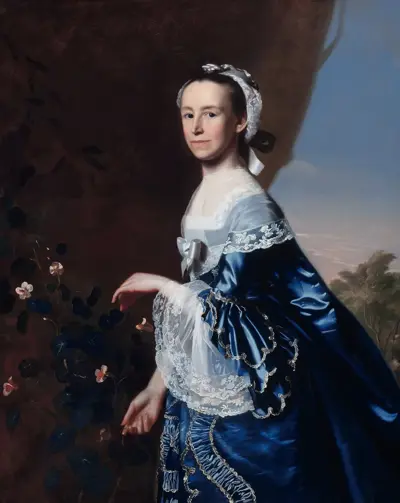
Mercy Otis Warren was a poet, playwright and pamphleteer during the American Revolution. During the years before the American Revolution, Warren published poems and plays that attacked royal authority in Massachusetts and urged colonists to resist British infringements on colonial rights and liberties. She was married to James Warren, who was likewise heavily active in the independence movement.
