Paul Samuelson Quotes
Sooner or later the Internet will become profitable. It's an old story played before by canals, railroads and automobiles.
Samuelson, Paul A. Syndicated Column. Tribune Media Services, 2000.


Marie Joseph Paul Yves Roch Gilbert du Motier

Although Madison vetoed the Federal bill to improve the national infrastructure, he was very much for the improvements and he said so in this veto message. He, however, did not see the Constitutional authority for the Federal government to appropriate moneys to be spent in the States for infrastructure improvement. He was for a Constitutional Amendment to do so or to make the improvements using State money as New York did building the Erie Canal. Alexander Hamilton, and many of the Congressmen who voted for the bill disagreed (many of whom were also in the Constitutional Convention) and did not see the Constitutional limitation that Madison did. See Hamilton’s Quote 644278. He was particularly concerned that small and less affluent states could not possibly have the skill to design these or the finances to build them. Later President’s and Congresses sided with Hamilton. It would be hard to envision America today of Madison’s view had prevailed.


This quotation is important because it illustrates the important research and development role that the Government has played for the most important technological innovations of the second half of the 20th century. Even though most of the computer breakthroughs were developed by private companies, the government paid for most of the R&D and purchased the vast majority of the first computers on the market when private companies had not yet realized the value of computers and with the exception of IBM most of the private sector would invest no money in this unproven technology. This was the same as the telegraph, the railroads and others before and the Internet and more afterward.


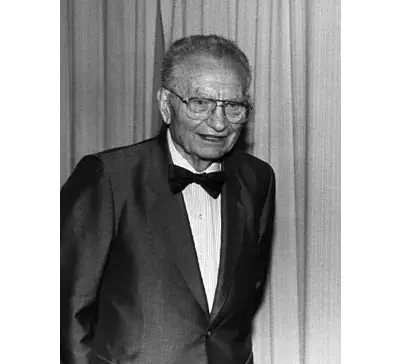
Paul Anthony Samuelson (May 15, 1915 – December 13, 2009) was an American economist who was the first American to win the Nobel Memorial Prize in Economic Sciences. When awarding the prize in 1970, the Swedish Royal Academies stated that he "has done more than any other contemporary economist to raise the level of scientific analysis in economic theory". Economic historian Randall E. Parker has called him the "Father of Modern Economics", and The New York Times considers him to be the "foremost academic economist of the 20th century".
