Fareed Zakaria Quotes
After World War II, the U. S. Government made massive investments in the nascent field of computer science, both in research and in industry. In the 1950s it bought almost 50 percent of all semiconductors that were produced, thus driving down their costs until the private sector could afford to buy them.
This quotation is important because it illustrates the important research and development role that the Government has played for the most important technological innovations of the second half of the 20th century. Even though most of the computer breakthroughs were developed by private companies, the government paid for most of the R&D and purchased the vast majority of the first computers on the market when private companies had not yet realized the value of computers and with the exception of IBM most of the private sector would invest no money in this unproven technology. This was the same as the telegraph, the railroads and others before and the Internet and more afterward.
Fareed Zakaria, Editor, Foreign Affairs, Time & Newsweek International, Commentator and Host, The Global Public Square, Political Commentator and TV Host, “Zacharia Replies”, Foreign Affairs, May-June 2013
Sourced by: Eigen's Political and Historical Quotations


This is why the American Government has played such a major role in most of the great technologies in American History. Interchangable Parts (A federal contract with Eli Whitney), Canal Construction (New York State built the Erie Canal), the Railroad (federal government gave hugh tracts of land to build the rail lines to the West), the Telegraph (No one would use it until the government financed the experiment to prove it by creating a line between Baltimore and Washington), AC Electricity, there the city of Rochester NY hired Tessler and Westinghouse to Demonstrate Generating Electricity at Niagra Falls and transmitting it over 20 miles which Edison’s Direct Current could not do), immunization (the Army Medical Corps gave the first grants to universities to develop the science of vaccines and immunization, the computer (in WWII the U. S. financed the development of computers sent to England to implement Turing’s breaking of the German “unbreakable” code), atiomic energy (the Manhattan Project—the largest scientific endeavor the world has known), the Internet (Developed with long term research funds for DARPA the future technology research arm of the Defense Department. American investors and businesspeople took each of these and developed them but the initial steps, when no capitalist dared risk on such basic and futureistic efforts were taken by American Government which probably could never have developed these technologies but the private sector could not do it with government in the role Moritz herein describes.


This quotation illustrates on how even recent history can be perceived differently depending on one’s philosophy and world view. In America, we tend to minimize the government’s role in important innovation and great leaps forward. Many people from Communist or Socialist cultures, tend to minimize the role of private enterprise. For example in the case of the Internet, it is true that all the initial R&D was funded by DARPA, a unit of the Defense Department. And it is also true that the World Wide Web innovation and development was done and paid for by CERN a scientific consortium of European Governments. However, the total amount of those two government expenditures would not equal Microsoft’s R&D budget for 1 day. Most of the developmental capital came from the private sector and the people who did most of the innovative work were private sector employees. However, there would have been many years delay if the U. S. Government had not funded the first small but critical activity. The government sector provides a very large proportion of the sales income for Microsoft, Apple, Intel and the many other Silicon Valley firms, not with contracts for innovation but as buyers of their hardware and software. There are government contracts but those applications are specialized for the government and are a small fraction of the revenue received by Silicon Valley.


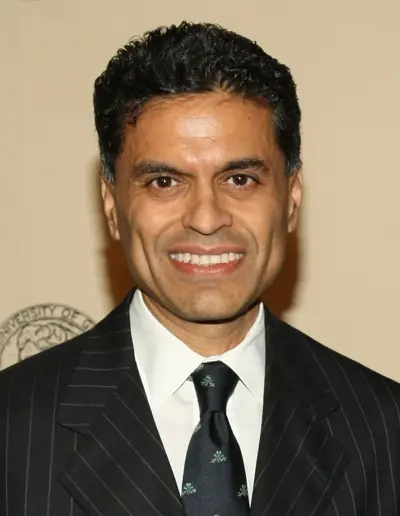
Fareed Rafiq Zakaria is an Indian-American journalist, political commentator, and author. He is the host of CNN's Fareed Zakaria GPS and writes a weekly paid column for The Washington Post. He has been a columnist for Newsweek, editor of Newsweek International, and an editor at large of Time.
