Viktor Vekselberg Quotes
When it comes to innovation, Silicon Valley appeared thanks to the government. Let’s not have illusions about this. It appeared in the first instance thanks to serious contracts with the military-industrial complex. And to this day, Silicon Valley—don’t try to twist things around, still relies heavily on … [government] contracts.
This quotation illustrates on how even recent history can be perceived differently depending on one’s philosophy and world view. In America, we tend to minimize the government’s role in important innovation and great leaps forward. Many people from Communist or Socialist cultures, tend to minimize the role of private enterprise. For example in the case of the Internet, it is true that all the initial R&D was funded by DARPA, a unit of the Defense Department. And it is also true that the World Wide Web innovation and development was done and paid for by CERN a scientific consortium of European Governments. However, the total amount of those two government expenditures would not equal Microsoft’s R&D budget for 1 day. Most of the developmental capital came from the private sector and the people who did most of the innovative work were private sector employees. However, there would have been many years delay if the U. S. Government had not funded the first small but critical activity. The government sector provides a very large proportion of the sales income for Microsoft, Apple, Intel and the many other Silicon Valley firms, not with contracts for innovation but as buyers of their hardware and software. There are government contracts but those applications are specialized for the government and are a small fraction of the revenue received by Silicon Valley.
Viktor Vekselberg, Ukrainian Economist, Businessman, Capitalist and Oligarch, Quoted in Chrystia Freeland, “The Next Russian Revolution”, The Atlantic, October 2011
Sourced by: Eigen's Political and Historical Quotations


This quotation is important because it illustrates the important research and development role that the Government has played for the most important technological innovations of the second half of the 20th century. Even though most of the computer breakthroughs were developed by private companies, the government paid for most of the R&D and purchased the vast majority of the first computers on the market when private companies had not yet realized the value of computers and with the exception of IBM most of the private sector would invest no money in this unproven technology. This was the same as the telegraph, the railroads and others before and the Internet and more afterward.

The “folks” were private corporations want to run schools and have won some contracts to operate Charter Schools. They argue that the free market should prevail when it comes to education and schools should not necessarily be run by local governments. Corporations should be given a chance in a “free market.” However, as Molnar observes, there is more than a little hypocrisy in the these educational corporations totally depend on public, tax dollars for the existence. Ironically, there is a sound market for elite private schools which are in a free market which are funded with private money. However, these educational corporations have chosen NOT to compete in this private arena. They only want public money. Critics argue that they are not very good at operating schools but are quite skilled at politically obtaining taxpayer money. So far there is no data from objective studies which shows that these educational corporations can operate better or less expensive schools.


This is why the American Government has played such a major role in most of the great technologies in American History. Interchangable Parts (A federal contract with Eli Whitney), Canal Construction (New York State built the Erie Canal), the Railroad (federal government gave hugh tracts of land to build the rail lines to the West), the Telegraph (No one would use it until the government financed the experiment to prove it by creating a line between Baltimore and Washington), AC Electricity, there the city of Rochester NY hired Tessler and Westinghouse to Demonstrate Generating Electricity at Niagra Falls and transmitting it over 20 miles which Edison’s Direct Current could not do), immunization (the Army Medical Corps gave the first grants to universities to develop the science of vaccines and immunization, the computer (in WWII the U. S. financed the development of computers sent to England to implement Turing’s breaking of the German “unbreakable” code), atiomic energy (the Manhattan Project—the largest scientific endeavor the world has known), the Internet (Developed with long term research funds for DARPA the future technology research arm of the Defense Department. American investors and businesspeople took each of these and developed them but the initial steps, when no capitalist dared risk on such basic and futureistic efforts were taken by American Government which probably could never have developed these technologies but the private sector could not do it with government in the role Moritz herein describes.


Many of his greatest ideas were not sufficiently appreciated by many other scientists nor the businessmen who funded scientific projects then. Tesla was one of the great American immigrant scientists. He found in America the kind of intellectual and operational freedom that did not exist in the rigid, monarch-controlled, Austro-Hungarian Empire. He developed patents and techniques that formed the technological bases of radio, telephone long distance, TV, cell phones, Wi Fi, just to name a few. Most important he was Thomas Edison’s great nemesis. Edison invented DC electric generators that could power factories or entire streets in a neighborhood. Tesler invented and developed AC electrical technology which could power entire cities and he could move electricity over long distances which Edison could not. Tesler was one of the first scientists to conceive of and try to implement “Big Science” where there were huge capital investments to develop machines and systems to do what had never been done before—philosophically like the CERN Hadron Collider. Tesler even convinced a large corporation to finance the construction of a massive building and tower so he could experiment with the wireless transmission of electricity. However, as the industrial democracies have learned, Big Science can only be funded by governments and it often takes sever working in consort to afford the huge investment that is required. In Tesler’s era, the federal and state governments did not fund scientific research so his work was not only technically ahead of his time but also conceptually. He anticipated most of the problems and need for a national power grid that was challenging America even at the beginning of the 21st century.

He was referring to the institutions in the particular fields. An established institution in education like a university might develop an innovation in astronomy or language translation, but not likely develop significant innovations in education. An established computer programming company might innovate the method of warehousing and shipping merchandise, but they are not likely to develop an innovative way of computer programming. That is typically done by a programming non-established firm or individual. There are a number of exceptions and this is not put forth as a general principle, but as a statistical observation. Established institutions are working harder and smarter to find ways of innovating regularly, and may succeed more frequently than the present.

Babbage anticipated the digital era when a small number of computer programmers develop a powerful program that can be used by millions of people who have no skill at programming.
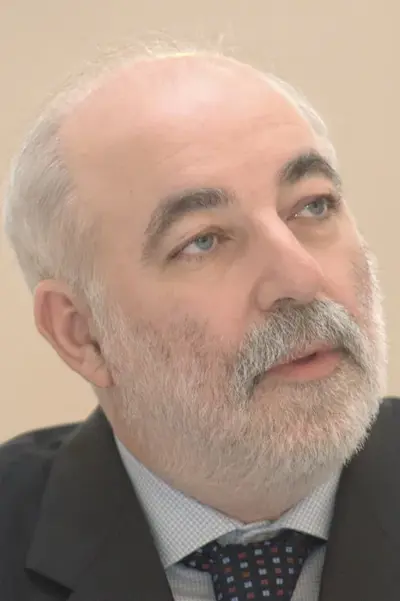
Viktor Felixovich Vekselberg is a Russian billionaire businessman. He is the owner and president of Renova Group, a Russian conglomerate. According to Forbes, as of October 2019, his fortune is estimated at $11.4 billion, making him the 119th richest person in the world.
