Maria Weston Chapman Quotes
Slavery can only be abolished by raising the character of the people who compose the nation; and that can be done only by showing them a higher one.
Chapman, Maria Weston. Right and Wrong in Massachusetts. Dow & Jackson, 1839.


Pernambuco is a state of Brazil. His voyage took him to several slave countries.


See {633926} for a quotation from the text that transmitted the resolution.

This was not an original notion with Abraham Lincoln. Seward and most of the “Radical Republicans” believed that the slavery issue had to be resolved and attempts to compromise were futile.


This prophecy written in the later years of Jefferson’s life turned out to be all too true. St. Domingo was an Island in the Caribbean where slavery produced a bloody war. The American Civil War would be far worse.

This is a memorable historical quotations because it shows the extreme level of hypocrisy and lack of logic of which man is capable of when his way of life and world view is threatened. In this case Gordon sees the right to own slaves as a basic civil right. He does not see that the right of possessing slaves totally denies virtually all civil rights to the slave. In his and other Southern views, to assure a man’s liberty he had to have the right and freedom to deny freedom to others, torture others at will, destroy families and remove all hope and aspiration of some people.

This fear was great among many who were abolitionists as potentially there might be mass slaughter of all Southern whites.

Even before we had a Constitution there was major opposition to slavery. The “price” of the American Union was the acceptance of the slavery of the South. But the hypocrisy of a country based on liberty to allow and enforce slavery was not lost on the founding fathers. Ironically the abolitionists among the founding fathers were certain that they could persuade the Southern slaveholders of the error of slavery in a few years and things would be set right in the land. Even George Washington {630626}, and Thomas Jefferson and some other slaveowners at the time wished to see its abolition. Slaveholding Southern Founding Fathers in general were so wary of the abolitionists that they achieved structural, disproportionate, power in the new Constitution to ward off the abolitionists attempts to reform slavery.

For more about the Bureau. See {629185}.and {629187}.


This quotation is very interesting historically. Despite the fact that Washington DC was a thoroughly racially segregated city, and the Southern racists controlled much of Congress, Blacks as well as whites were welcome in the Congressional galleries, and they attended many debates. Slavery and equality were not just debated in the 1850s but the issue was in constant friction from the earliest Congress.

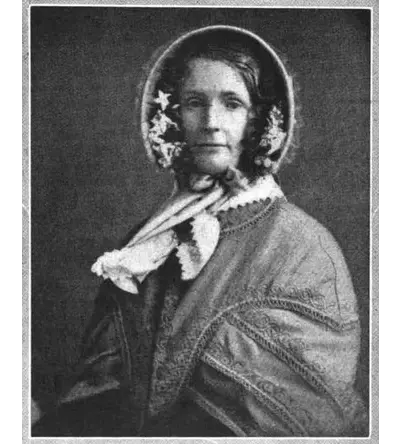
Maria Weston Chapman was an American abolitionist. She was elected to the executive committee of the American Anti-Slavery Society in 1839 and from 1839 until 1842, she served as editor of the anti-slavery journal The Non-Resistant.
