John Wilkes Booth Quotes
Sic temper tyranis! The South is avenged!
The Latin phrase is the motto of the State of Virginia.
John Wilkes Booth, 1838-1865, Actor and assassin, Words shouted at Ford's Theater, Washington DC, after he shot Abraham Lincoln, April 14, 1865
Sourced by: Eigen's Political and Historical Quotations


The Governor was a staunch Confederate supporter but his state legislature majority favored the Union. He was forced out of the governorship when the 1861 election gave the legislature a veto-proof pro Union majority.


The point about the negroes who were born into American slavery being less aggressive than those captured and transported to America is often overlooked. Slavery not only was cruel, moral, and inhuman in its own right, but also took its toll over generations as a result of the psychological effects of the terror of slavery. Despite these, it is amazing how resiliant the American Blacks were under those circumstances. in some cases one or two saves escaped after committing a violent act as they had little to lose for trying as they wold be killed if caught. A few of these escaped to the North and others reached Southern Cities like Charleston where there was a small free black community in which they could be absorbed.


When the Confederate Government realized that the Union was planning to arm escaped slaves and induct them into the Union Army, they quickly passed a law that declared any escaped slave who joined the Union Army or wore its uniform was guilty of Treason and would be executed. Most Union Generals one way or another got word to the Confederate Officers that they had better treat all Negro Union Soldiers as prisoners of war. Even President Lincoln warned the South. Butler, however, had a large number of Negro troops in his area and had heard threats of some of the Southerners to execute Black prisoners of war. He had a way of making things very clear, and he was able to prevent murder of any of his Negro troops despite the Treason law.


While there were atrocities committed by both sides in the Civil War, the proportion tended to be heavily weighted by Confederate perpetrations. The Confederate officers were not appointed by the command structure and under strict military discipline, but they were elected by the troops and could be so removed (except for the general officers who were appointed by the confederacy). Also, the confederate troops were not as well fed or supplied as the North and they had fewer resources with which to fulfill their obligations to prisoners. In a number of battles, ill-clothed soldiers stripped the Union dead, wounded and prisoners, often naked to use their shoes, blankets and clothing, Union prisoners of war were much more badly abused in the prisoners of war camps like Andersonville which were not under the command of Robert E. Lee.


While Douglas and Lincoln were political opponents with little love lost between them, both were patriots. Douglas’s position were much more popular in the South, and the moment he realized that Lincoln would win the Presidency, he headed South where he was very persuasive in trying to hold the Union together, but he could not see all the potential rebels and was only effective with some. South Carolina not only seceded, but in order to prevent any changing of minds, some the worst of the South Carolinians, attacked Fort Sumter firing on the American Flag and attacking and capturing the Union troops who were totally outnumbered. The Civil War was then inevitable.


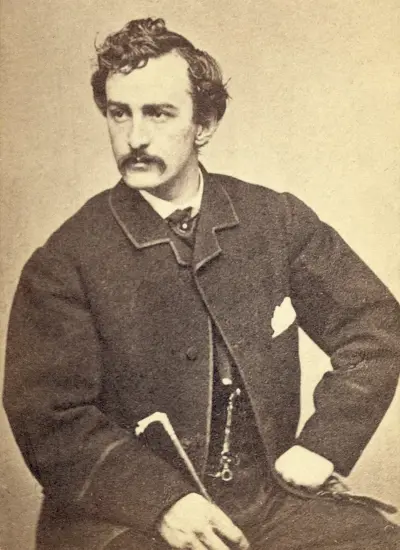
John Wilkes Booth was an American stage actor who assassinated President Abraham Lincoln at Ford's Theatre in Washington, D.C., on April 14, 1865. A member of the prominent 19th-century Booth theatrical family from Maryland, he was a noted actor who was also a Confederate sympathizer; denouncing President Lincoln, he lamented the recent abolition of slavery in the United States.
