Continental Congress Quotes
Resolved, that it be recommended to the several Legislatures of the United States immediately to pass laws the most effectual for putting an immediate stop to the pernicious practice of distilling grain, by which the most extensive evils are likely to be derived, if not quickly prevented.
Continental Congress, Resolution passed during the Revolutionary War
Sourced by: Eigen's Political and Historical Quotations


Samuel Langhorne Clemens, 1835-1910. The Congressmen who voted for Prohibition in the next century had not read or believed this quotation of Twain’s.


This is a wonderful historical quotation which illustrates the effect of Prohibition on Norway—most of which was negative. Despite the fact that this article had been published in a leading American journal, virtually no one paid attention to it when Prohibition was being debated and instituted in America a few years later. Another aspect of the quotation is the economic effect. It illustrates how easy it is to start a trade war that was completely unintended. Also how a country, in this case Portugal and Spain, will make foreign policy decisions of which their poorer people bear the brunt.


Friedman was an advocate for the legalization of illicit drugs, claiming that the harm that is done by making drugs illegal is greater than that which would occur if drugs were legalized. He also observed that alcohol kills times the number of Americans than does illegal drugs and tobacco kills four times as many as alcohol.

To this day efforts to regulate alcohol, the nation’s most frequent drug of choice and cause of addiction and violence, are met with the same “virtues” of employment and tax revenue. It was not until the 1990s that we learned that the revenue from alcohol taxes was far less than the cost of society coping with the problems of drinking and addiction.

This volume roughly is to Islam what the Gospels are to Christianity. To most Muslims The Sunnah is a collection of holy material on the life of Mohammed. It is not of the force or importance as the Koran, but it is revered. This quotation is in the third person and does not have the Prophet’s exact words.


Even in 2011 smoking caused over 300,000 and drinking alcohol another 100,000.


The charge was made that the wealthy, who paid the larger proportion of an income tax, could get the poor and the middle class to pay the taxes via a Federal Alcohol Tax which would be paid proportional to the alcohol consumed—not even the cost of the alcohol. A quart of cheap whiskey was taxed at the exact same amount as a quart of fine, aged, double malt liquor—about the most regressive tax that has been and still is in force in America. If Prohibition were still in force, the Federal Government would have to raise the income tax to make up for the loss of an alcohol tax. It is debated to this day, how much of a factor this played in the repeal of prohibition.

Before we had national prohibition, many Southern states and counties outlawed alcohol. “Wets” were those who wanted to allow drinking of alcohol. “Drys” were those who did not. The South was “dry” and voted overwhelmingly for national prohibition, and later voted to keep it even when a majority of the country voted to repeal it. The irony was that the South has always been, and still is, one of the highest alcohol consumption regions and has had much alcoholism. Hence Roger’s humor.

This has always been a problem for the US Military. Attempts at prohibition have been bad for morale, and there is a cultural tradition that military men drink alcohol. However in the Gulf War, our military men and women stationed in Saudi Arabia could not drink as a consequence of the Islamic prohibition of alcohol in Saudi Arabia. There has never been, in the history of our military a period with fewer courts martials, and discipline problems in general. Very few assaults, rapes and murders.


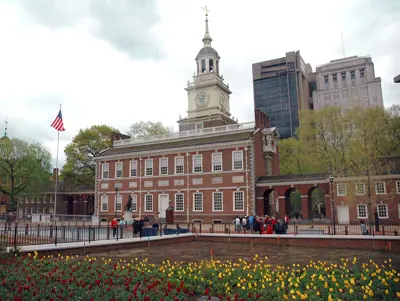
The Continental Congress was a series of legislative bodies which met in the British American colonies and the newly declared United States just before, during, and after the American Revolution. The term "Continental Congress" most specifically refers to the First and Second Congresses of 1774–1781 and may also refer to the Congress of the Confederation of 1781–1789, which operated as the first national government of the United States until being replaced by the current congress. Thus, the term covers the three congressional bodies of the Thirteen Colonies and the new United States that met between 1774 and 1789.
