C. Everett Koop Quotes
This is not a prohibitive society. We're not going to tell people they can't smoke. We learned that we can't tell people they can't drink.
Even in 2011 smoking caused over 300,000 and drinking alcohol another 100,000.
C. Everett Koop, Surgeon General of the United States, Quoted in American Bar Association Journal, January 1, 1986
Sourced by: Eigen's Political and Historical Quotations


Friedman was an advocate for the legalization of illicit drugs, claiming that the harm that is done by making drugs illegal is greater than that which would occur if drugs were legalized. He also observed that alcohol kills times the number of Americans than does illegal drugs and tobacco kills four times as many as alcohol.


This quotation not only illustrates Ford’s wide ranging concern about public affairs but illustrates that the addictive properties of cigarettes were known long before the cancer and other disease causing properties of tobacco were understood. Yet the addictive properties were the last deleterious effects of smoking that the tobacco companies would admit to. At the end of the 20th century, the CEO’s of the major tobacco company all lied to Congress in hearings, claiming that cigarettes were not addictive. Ford and millions of people knew better generations ago.

Suggestions of prohibition of alcohol have been made for a long time in America. It was tried for a few years in he early 20th century. Instead, alcohol is regulated in most parts of America.

The World Health Organization, a component of the United Nations, advocated national restrictive legislation to control and eliminate smoking. The smoking addict, hooked on nicotine was caught between public health efforts to regulate and eliminate tobacco and the efforts to treat the addicts and respect the individual’s right to freedom of choice.

Despite the known link to crime, and the fact that alcohol kills many times more Americans that do illicit drugs, Mr. Bennett and most of his successors did not target drinking in their various war on drug efforts despite the fact that alcohol is a much more dangerous and addicting drug than any of the illicit drugs. In the George W, Bush administration, health authorities in the government were ordered not to tell the public that alcohol was a drug despite the fact that all the Surgeon Generals and medical science has explained that it is not only a dangerous drug, but is a drug that induces violence more so than any other drug. The alcohol lobby did not want the public to associate the alcohol industry with the evils that drug dealers produce, so they used their political clout with the Bush administration for whom the industry provided large political contributions as well as conservative political consultants.


This pledge was taken by over half a million Americans in Mathew's 1849-1851 tour of the United States promoting the Teetotal Abstinence Society.


Samuel Langhorne Clemens, 1835-1910. The Congressmen who voted for Prohibition in the next century had not read or believed this quotation of Twain’s.

Bloomberg was the first public official in the world to push for and pass a law banning smoking in all offices, hotels, restaurants, and other public places despite huge opposition funded by the tobacco companies and many of the business and restaurant owners. Despite the fact that it would literally save thousands of lives a year, a ban was feared by politicians as it might harm business, tourism and their own political positions. However, after New York banned smoking, other cities started to do the same, not only in America but all over the world. This saved millions of lives. One courageous man, a single politician, changed much of the world, and saved many more lives than most doctors will.

Marijuana had been made legal in a number of states at that time. Based on the example of New York City, many other cities of the world were just then passing ordinances to make it illegal to smoke in any public place or any private establishment that serves the public.


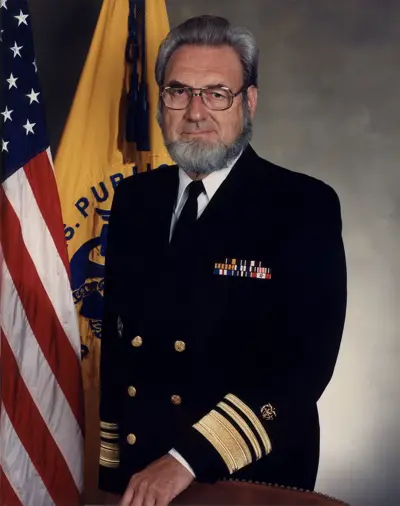
Charles Everett Koop was an American pediatric surgeon and public health administrator. He was a vice admiral in the Public Health Service Commissioned Corps, and served as the 13th Surgeon General of the United States under President Ronald Reagan from 1982 to 1989. According to the Associated Press, "Koop was the only surgeon general to become a household name."
