Henry Ford Quotes
The Case Against The Little White Slaver
This quotation not only illustrates Ford’s wide ranging concern about public affairs but illustrates that the addictive properties of cigarettes were known long before the cancer and other disease causing properties of tobacco were understood. Yet the addictive properties were the last deleterious effects of smoking that the tobacco companies would admit to. At the end of the 20th century, the CEO’s of the major tobacco company all lied to Congress in hearings, claiming that cigarettes were not addictive. Ford and millions of people knew better generations ago.
Henry Ford, 1863-1947, Industrialist & Philanthropist, Pamphlet Against Cigarette Smoking, 1914
Sourced by: Eigen's Political and Historical Quotations

This is a classic example of the interaction between legislation, health and science. In 1931 the State of Michigan passed a law to protect the public health. It was written to ensure that there would not be unhealthy or dangerous substances added to cigarettes or the tobacco in cigarettes. No “ingredient deleterious to health” could be put in a cigarette. However, although it was not generally known at the time, there are few substances known to man that are as “deleterious to health” as the tobacco itself. The law protected public health, but the enforcement did not concentrate on the right ingredients.


The. law was enforced and upheld by the Tennessee Supreme Court (Austin v State) which recognized the health danger of tobacco. Tennessee was an agricultural state where tobacco was grown and the law was repealed as the result of political pressure. But this is the first and only absolute state prohibition on tobacco that has been enacted in the United States.


This was the first cigarette company that admitted what by then had been known by the cigarette companies for almost 50 years during which they continued to knowingly kill people and deny that there was any harm that could come from smoking.

Most people only know about Garrison’s abolition crusade. However he had others like temperance.


Watchtower Bible and Tract Society of New York. Alcohol is medically and scientifically a drug and an addicting drug at that. The Jehovah's Witnesses also shun alcohol for that reason.


Friedman was an advocate for the legalization of illicit drugs, claiming that the harm that is done by making drugs illegal is greater than that which would occur if drugs were legalized. He also observed that alcohol kills times the number of Americans than does illegal drugs and tobacco kills four times as many as alcohol.


Marijuana had been made legal in a number of states at that time. Based on the example of New York City, many other cities of the world were just then passing ordinances to make it illegal to smoke in any public place or any private establishment that serves the public.


Cixi had issued a 10 point edict designed to end opium use in China. One of its most interesting elements was that it only applied to Chinese under the age of 60. She recognized that for those elderly people who are thoroughly addicted to opium, prohibition would be to radical a change and their life expectancy was not very long. At the time, the average lifespan of Chinese was under 50.
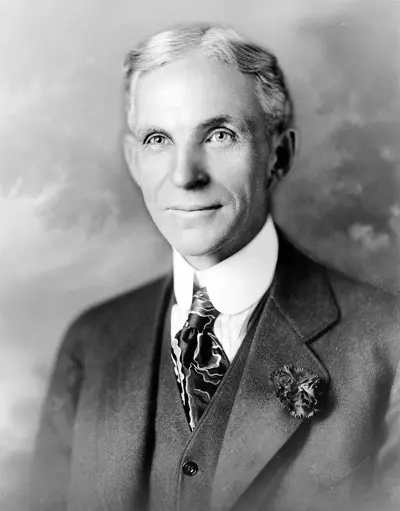
Henry Ford was an American industrialist, business magnate, anti-Semite, and founder of the Ford Motor Company and chief developer of the assembly line technique of mass production. By creating the first automobile that middle-class Americans could afford, he converted the automobile from an expensive curiosity into an accessible conveyance that profoundly impacted the landscape of the 20th century.
