Alfred Rosenberg Quotes
Racial history is therefore natural history and the mysticism of the soul at one and the same time; but the history of the religion of the blood, conversely, is the great world story of the rise and downfall of peoples, their heroes and thinkers, their inventors and artists.
Rosenberg, Alfred. The Myth of the Twentieth Century: An Evaluation of the Spiritual-Intellectual Confrontation of Our Age. Translated by Vivian Bird, Noontide Press, 1982, p. 21.

The Turks had massacred the vast majority of their Armenian population, and treated the Greeks badly killing and them many of them from territories the Ottoman Turks had conquered. Jews fared better but were 2nd class citizens. Bristol was the American State Department’s senior official and was very “understanding” of the murders and ethnic cleansing despite the fact that President Wilson and most American politicians were very opposed to the Turkish massacres. See {620614} and {620599} . Two factors makes this quotation very significant. First, at the time the State Department was not really under the control of either the President or the Congress. It was not rare for the Department to have its own policies and implement them. This began to change in WWII and FDR exercised much more control than previous presidents since Theodore Roosevelt. The second factor is that there were many racists throughout the State Department—Bristol was only one. There was little concern for minorities’ welfare and the emphasis was on commerce. See {620600} Even in Truman’s administration, the President had massive opposition from the State Department for his policy of recognizing the State of Israel. Today, this kind of racism in the State Department is very rare, and human rights has been one of their major concerns. There were many changes in 75 years.


Russell like the rest of the Southern Congressional delegation, though members of the President’s own party were vehemently opposed to any civil rights legislation that would erode the legal racism and segregation that was prevalent in the South. The irony of Russell’s statement is that by Russell’s definition of a “mongrel race” the South was just that. And in a very real genetic sense all the great civilizations were characterized by interbreeding which is what Russell and other Southerners were paranoid about. The Southern institution of slavery was rife with the sexual abuse of the female slaves by the white masters and/or members of their family, overseers and other whites with power over the slaves. While many of the offspring were identifiable as mixed race (defined as Black by the laws at the time) many appeared to be white and light skinned enough to “pass” and did. A very large percentage of Southern white and black families had mixed blood in the family when Russell was complaining. More to the point, although it was not known at the time, we now know that every human being on earth can be genetically traced back through myocardial DNA to Blacks emanating from Africa. However, even using his narrow vision of race, his history was wanting. A number of great civilizations were of mixed race. One dramatic example was the great dynasties of Egypt. Cleopatra, herself, was from the union of Alexander the Great’s Greek General Ptolemy and the traditional line of Egyptian Pharos. Alexander’s Greek Soldiers interbred, as part of Alexander’s policy of occupation as suggested by Aristotle. All those societies thereafter were “mongrel” races at least in the ruling and upper classes. Actually the United States and the Soviet Union, the two super powers of the day both were ethnically and racially, highly diversified and both had a great deal of miscegenation. Scientists had made a very good argument that miscegenation strengthens a people—not weakens it.


This report was submitted to President Franklin D. Roosevelt, who accepted the recommendation and signed Executive Order 9066. The Japanese on the West Coast were then rounded up and interned by DeWitt in what was one of the lowest and disgraceful points in American history. A national apology was made 34 years later. See {635792}.


He was agreeing with the Right Wing racist Dutch politician Geert Wilders that one of the dangers of immigration of different races and ethnicities is that their children would not be capable or able to contribute to America or in his view make America Great Again as it has been diminished by all these immiogrant babies of the last few generations. There are very few areas of civilization where America is not greater today than ever before.


He was of course not the President then. But the stands that politicians took with respect to the rebellion of the South often determined their political futures. See {640752} for another future President’s quotation on the subject.
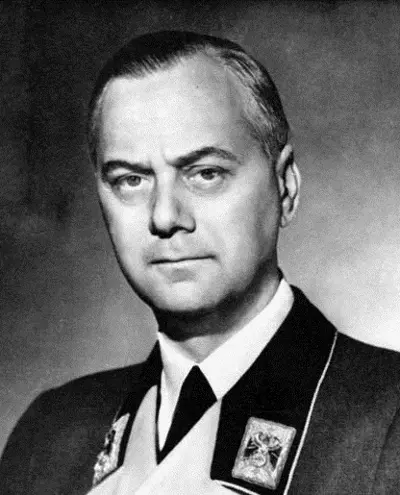
Alfred Ernst Rosenberg was a Baltic German Nazi theorist and ideologue. Rosenberg was first introduced to Adolf Hitler by Dietrich Eckart and held several important posts in the Nazi government. He was the head of the NSDAP Office of Foreign Affairs during the entire rule of Nazi Germany (1933–1945), and led Amt Rosenberg ("Rosenberg's bureau"), an official Nazi body for cultural policy and surveillance, between 1934 and 1945. During World War II, Rosenberg was the head of the Reich Ministry for the Occupied Eastern Territories (1941–1945). After the war, he was convicted of crimes against peace; planning, initiating and waging wars of aggression; war crimes; and crimes against humanity at the Nuremberg trials in 1946. He was sentenced to death and executed on 16 October 1946.
