King James I Quotes
Proclamations are not of equal force with laws, yet is a duty incumbent on me, and a power inseparably attached to the crown, to restrain and prevent such mischiefs … against which no law is extant.
James I, 1566-1625, King of Great Britain & Scotland, Statement to Parliament, 1610
Sourced by: Eigen's Political and Historical Quotations


This was written shortly before he assumed the crown.

The statement so offended the Lords—the highest court of England—that he was imprisoned by the Lords and not released until he had recanted the position. The argument goes on today in many countries incuding the United States.


The Massachusetts Bay Company

The issues of check and balances in the American constitution were radical by world standards of the day. However, it was by no means an new concept and as this quotation illustrates was discussed and debated in England, but although England was far ahead of almost all other countries with respect to eliminating absolute power, they never took it as far as the Americans did. That took a revolution.

Charles I was tried by Parliament but at the time there was the concept of Royal Impunity and there was no existing crime that he could be charged with despite the murder of many of his citizens. Cooke established the legal precedent making Tyranny a crime. See {624032}.
Some of the Patriots of Early America realized that the oppressions of British rule were coming from Parliament and initially took the position that only the King could make laws for the colonies and not Parliament. Therefore, they were as Englishmen challenging illegal English laws. Most American hostility was directed at Parliament and not the King. However, once there was any physical resistance, King George came down with such a heavy hand that American hatred transferred to him. For related quotes on the King/Parliament issue, see {639145}, {639144}, {639142}, {639141}, {639140}, & {639137}

Some of the Patriots of Early America realized that the oppressions of British rule were coming from Parliament and initially took the position that only the King could make laws for the colonies and not Parliament. Therefore, they were as Englishmen challenging illegal English laws. Most American hostility was directed at Parliament and not the King. However, once there was any physical resistance, King George came down with such a heavy hand that American hatred transferred to him. For related quotes on the King/Parliament issue, see {639145}, {639143}, {639142}, {639141}, {639140}, & {639137}

This problem exists even in democracies where administrations often seek to expand their power and use or create a crisis to justify the expansion of their powers.

Appeals to Providence included Trial by Fire, Trial by Water and related Trial by Ordeal. See Wikipedia: http://en.wikipedia.org/wiki/Trial_by_ordeal for explanations of these.


Several years before the Battle of Bunker Hill, revolutionary activity had already broken out in the American colonies—See {634132} for an example. This law gave the British authorities much more “clout” in dealing with the “seditious” American activities. It protected English law enforcement officials from being tried in local Colonial courts for murder or assault in putting down insurrections. George Washington and other Patriots were outraged over this law. See {634131}.

He had been specifically asked about the Federal Affordable Care Act—Obamacare, which he had opposed when it was debated.

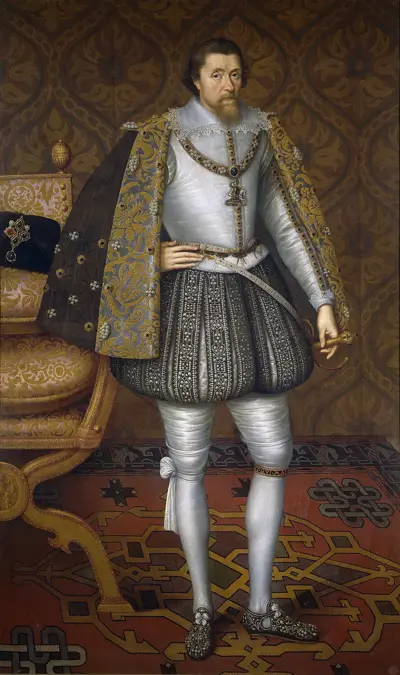
James VI and I was King of Scotland as James VI from 24 July 1567 and King of England and Ireland as James I from the union of the Scottish and English crowns on 24 March 1603 until his death in 1625. The kingdoms of Scotland and England were individual sovereign states, with their own parliaments, judiciaries, and laws, though both were ruled by James in personal union.
