Edward Randolph Quotes
They execute the powers in their charter otherwise than as directed, and exceed them …. They continue to exact an oath of fidelity to themselves, notwithstanding the King's orders to the contrary, and make such oath essential to the tenure of office and even freedom of the Company.
The Massachusetts Bay Company
Edward Randolph, ~1632-1703, Emissary of King James II, sent to colonies to investigate the overall state of colonial affairs, especially in New England, Articles of high misdemeanor exhibited against the Governor and Company of Massachusetts Delivered to the English Board of Trade
Sourced by: Eigen's Political and Historical Quotations


Many American colonists had relatives and friends in England, and Paine argued that American independence would help and not het the English people.


A group of citizens of Mecklenburgh County, NC gathered together and produced their own “Declaration of Independence” a little over a year before The Declaration of Independence of July 4, 1776. Some people refer to the earlier document as the Mecklenburgh Declaration of Independence. It is not known how much Alexander personally wrote however he signed as the Chairman of the convention. The delegates voted to send a copy to the Continental Congress, and the reader will recognize some of the similar language which found its way into the 1776 document. The Mecklenburgh Resolution also contained a structure of government.

The highest court in New York. This was the generally accepted view of international law until WWII when atrocities and crimes against humanity were coped with. Also, at the time of this writing America was a small emerging state and not one of the great powers. Hence the prohibition of even commenting on the internal affairs of another nation was important to us. Now that America is a superpower, and society is more concerned with human rights, the point of view has changed.


The issues of check and balances in the American constitution were radical by world standards of the day. However, it was by no means an new concept and as this quotation illustrates was discussed and debated in England, but although England was far ahead of almost all other countries with respect to eliminating absolute power, they never took it as far as the Americans did. That took a revolution.


He particularly had difficulty with the Pope and whose authority was supposed to be dominant in Europe. King Henry left the Catholic Church and made Protestantism the official English Church. It has been such ever since—all the result of a power struggle between two men.

Hopkins was complaining about the fact that England could tax the colonies and thereby take their property without their consent made the American colonists in the “miserable condition of slaves.” Essentially the fundamental complaint of the Americans was this and in a decade it would erupt as the American Revolution. At the same time, Hopkins was a slave owner and yet saw nothing wrong with that.
The Writs of Assistance allowed the English authorities to issue general search warrants without any charges being filed and without any kind of probably cause or review by an independent judge. The practice outraged the colonists and Otis argued in court against its legitimacy. He lost the case, but galvanized the nation. When the Constitution was up for ratification, people remembered and the price of ratification was eliminating this abuse, and others in the Bill of Rights. Ironically, the favorite argument given by the English authorities for the broad search warrants was the same as many police and politicians give today. “If a person has done nothing wrong, what is so terrible about searching his house?” If there is nothing to hide, nothing will be found. That argument of course begs the question and was even being passionately debated in 2006 over the renewal of the Patriot Act.
He was a poor governor in general and was fired and replaced by the Dutch East India Company which was a happy occurrence for the colonists. The company was a money making institution and depended on colonists who would farm, trade and manufacture. If they were unhappy, the company would not profit. They would not have minded a tyrant if he could produce profits as some did in the Dutch East Indies, but Kieft was a loser on all counts.

1st Earl of Beaconsfield. The “Second Chamber referred to the House of Lords—the upper house of the British Parliament. The notion in both England and the United States was that the upper house—the Senate in the US case—should be independent and not easily pressured or influenced by the passions and forces of the time. One believe has been that only the wealthy could be independent since people who were not wealthy would be more easily bribed or pressured by forces in the system like a political party. In England at the time, wealth and property were synonymous. In some notable cases in American politics, wealth leaders were very independent and served the society as a whole. Theodore Roosevelt, Franklin Delano Roosevelt, and John F. Kennedy were very wealthy men. So was Abraham Lincoln who had made a great deal of money as a lawyer. Senators and Presidents in America and Members of the House of Lords in England have tended to be much more wealthy than average. Unfortunately, although there were great examples of wealthy independent politicians, many of the upper class have an insensitivity to average people and the poor. Further, they tend to have values and beliefs that are different from most people.
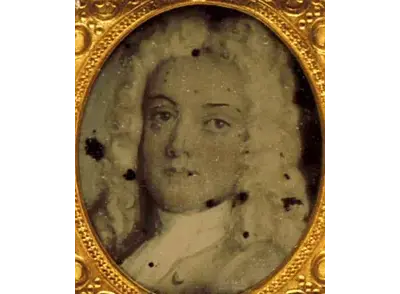
Edward Randolph, sometimes referred to as Edward Randolph of Bremo, was a ship captain, a London tobacco merchant, and the seventh and youngest son of William Randolph and Mary Isham.
