John Adams Quotes
Power always follows Property. This I believe to be as infallible a Maxim, in Politicks, as, that Action and Re-action are equal, is in Mechanicks. Nay I believe We may advance one Step farther and affirm that the Ballance of Power in a Society, accompanies the Ballance of Property in Land. The only possible Way then of preserving the Ballance of Power on the side of equal Liberty and public Virtue, is to make the Acquisition of Land easy to every Member of Society: to make a Division of the Land into Small Quantities, So that the Multitude may be possessed of landed Estates. If the Multitude is possessed of the Ballance of real Estate, the Multitude will have the Ballance of Power, and in that Case the Multitude will take Care of the Liberty, Virtue, and Interest of the Multitude in all Acts of Government.
John Adams, 1735-1826, 2nd President of the United States (Federalist, MA), Letter to James Sullivan, May 26, 1776
Sourced by: Eigen's Political and Historical Quotations

Use included renting it. What he opposed was simply holding land when whites were driving Indians off their lands because all the unused land outside of the reservation was owned by someone and the asking price was very high. Ingersoll was considered to be the greatest orator and political thinker of his day, but his overt atheistic views curtailed his elected political career.


This was the basic document issued after the Russian Revolution establishing the basic legal and economic structure of the new Soviet State.

Excesses that CEOs and other corporate executives were getting for remuneration became an issue of political controversy in the beginning of the 2nd Milleneum. However, this quotation shows that this was not a new problem and has been considered for a long time.

In modern America, there are two political views of this notion. The one held by a narrow majority of the population is Trenchard’s quotation taken literally. Their view is that there is no way to maintain liberty if there is too wide a wealth gap between the rich and the rest of the population. The second variant, held by many conservatives, limits the equality to equality of opportunity. They are loathe to take any position that says that any gap between the rich and the remainder of the citizens might be too large. They would particularly disagree with the first sentence of this quotation. Another consideration is that this quotation does not even consider what became a major problem in the American Democracy—the ability and propensity of the very rich to bribe legislators and officials and/or make “campaign contributions” to obtain favorable treatment and/or “access”.

Although a conservative, he had many iconoclastic ideas. Almost all liberals and Democrats would agree with this quotation, but most conservatives and right wing Republicans support large concentrations of power in corporations and rich individuals.
Nelson was referring to the past. The industrial revolution created other forms of wealth and power as a huge factory could be built on a small piece of land. In farming, the yield is proportional to the acreage tilled. Not so in manufacturing. With the knowledge era, intellectual property could produce much wealth and power, and factory size and land ownership was not necessary.
In every society where there had been past unjust ownership of land, all efforts of land reform were faced with the problem of having to dispossess the current “owners” who themselves had not been guilty of the crimes of their ancestors in unjustly obtaining the land originally. In America land reform was unworkable in most cases and the solution was usually a large monetary payment as compensation for the land.

Muir had spoken at the Convention of Scottish Friends of the People at Edinburgh in 1792. He had advocated election reform allowing all men to vote, not just property owners and was sentenced by Braxfield to the Australian penal colony at Botany Bay. Braxfield expressed the deep distrust the establishment felt even for merchants, traders and others with fungible assets.


Peter van der Kun. The Roman society had developed huge inequalities in the wealth of its citizens. Land was the measure of wealth as the value was produced by the farming of it. In an agrarian reform, the holdings of any one citizen was limited to 500 acres. In effect the Romans created a maximum of wealth. To the owners of the large tracts of land, this was a redistribution of wealth.


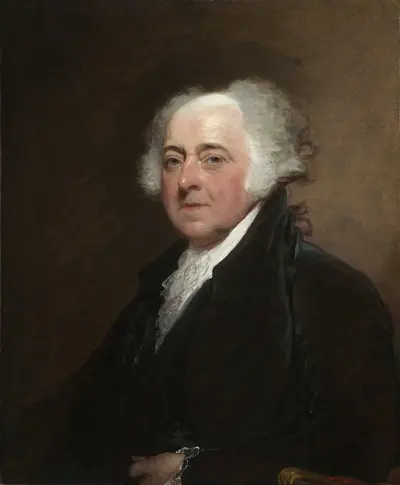
John Adams Jr. was an American statesman, attorney, diplomat, writer, and Founding Father who served as the second president of the United States from 1797 to 1801. Before his presidency, he was a leader of the American Revolution that achieved independence from Great Britain, and he served as the first vice president of the United States. Adams was a dedicated diarist and regularly corresponded with many important figures in early American history, including his wife and adviser Abigail Adams and Thomas Jefferson.
