Margaret Mitchell Quotes
Land is the only thing in the world that amounts to anything.
Mitchell, Margaret. Gone with the Wind. Macmillan, 1936, p. 39.

See {627027} for an earlier expression of this point.


See {638124} for how this Biblical passage evolved into a concept of property ownership


Paine, one of America’s founding fathers and the man most responsible for influencing Americans to revolt, is generally not given much attention in modern times. One of the main reasons was that his philosophy regarding land and land ownership is today considered socialist if not communist. Paine’s other views are mostly Apple pie American, but this is shocking to many Americans.

While Turgot was right about so much, this was one of his big errors—the assumption that land was fundamental to and necessary for, wealth. In many countries it is still true, but of the recent billionaires like Warren Buffet, Bill Gates, Carlos Slim and most others, they own very little land. In the United States and Canada, there are large tracts of land that few or no one will buy and a cast majority of people do not make their living from land.

Day was often associated with left wing causes, but she was very hard to classify in traditional political terms. This quotation shows that unlike most communists and many socialists, she was an advocate of private property although she fought for the ability of a larger proportion of the population to have property.

The Freedmens Bureau was created after the Civil War to assist newly emancipated Black slaves. In 1866, there was a debate in Congress to allow poor whites to obtain the services of the Freedmens’ Bureau. As a practical matter most of the poor whites were just as illiterate and poor as the ex-slaves. President Andrew Johnson was particularly anxious to assist the poor whites. See Quotation 643686.
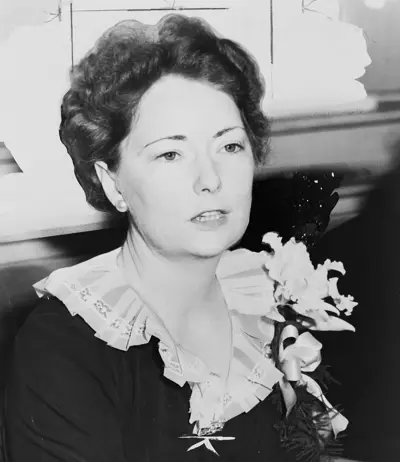
Margaret Munnerlyn Mitchell was an American novelist and journalist. Mitchell wrote only one novel, published during her lifetime, the American Civil War-era novel Gone with the Wind, for which she won the National Book Award for Most Distinguished Novel of 1936 and the Pulitzer Prize for Fiction in 1937. In recent years long after her death, a collection of Mitchell's girlhood writings and a novella she wrote as a teenager, titled Lost Laysen, have been published. A collection of newspaper articles written by Mitchell for The Atlanta Journal was republished in book form.
