Anthony Trollope Quotes
It is a comfortable feeling to know that you stand on your own ground. Land is about the only thing that can't fly away.
Anthony Trollope, 1815-1882, British Novelist, The Last Chronicle of Barset, 1867
Sourced by: Eigen's Political and Historical Quotations

The Bushmen are of the indigenous people of Botswana who have only had extended contact with the larger world recently.


The possession in perpetuity was the result of the Biblical Jubilee. See {638120} for an example of how the Jubilee functioned. Hebrew citizen could NEVER lose his land permanently even if he could not pay his debts. Spinoza was one of the most feared intellectuals in human history—feared that is by the established power structures. He is the only known person who was excommunicated by the Catholics, the Jews and the Muslims—all were forbidden to read his works. He was the enemy of authority and advocated personal reason as the guide for men.


Day was often associated with left wing causes, but she was very hard to classify in traditional political terms. This quotation shows that unlike most communists and many socialists, she was an advocate of private property although she fought for the ability of a larger proportion of the population to have property.
See {638095} for a brief explanation of the Jubilee. Spinoza was one of the most feared intellectuals in human history—feared that is by the established power structures. He is the only known person who was excommunicated by the Catholics, the Jews and the Muslims—all were forbidden to read his works. He was the enemy of authority and advocated personal reason as the guide for men.


Muir had spoken at the Convention of Scottish Friends of the People at Edinburgh in 1792. He had advocated election reform allowing all men to vote, not just property owners and was sentenced by Braxfield to the Australian penal colony at Botany Bay. Braxfield expressed the deep distrust the establishment felt even for merchants, traders and others with fungible assets.


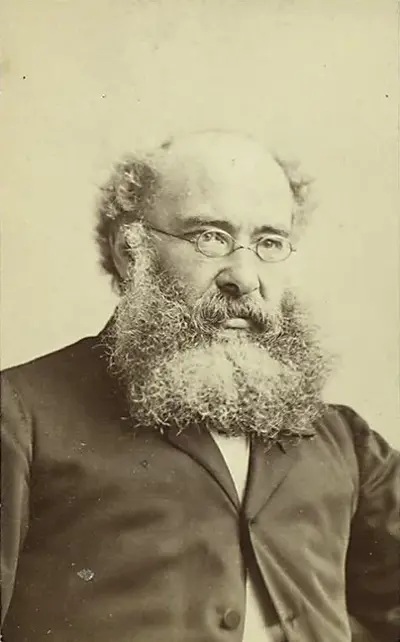
Anthony Trollope was an English novelist and civil servant of the Victorian era. Among his best-known works is a series of novels collectively known as the Chronicles of Barsetshire, which revolves around the imaginary county of Barsetshire. He also wrote novels on political, social, and gender issues, and other topical matters.
