Baruch Spinoza Quotes
There was one feature [the Jubilee] peculiar to this state [the Hebrew Republic] and of great importance in retaining the affections of its citizens, and checking all thoughts of desertion, or abandonment of the country: namely self-interest, the strength and life of all human action. This was particularly engaged in the Hebrew State, for nowhere else did citizens possess their goods so securely as did the subjects of this community for the latter were owners of their plots of ground in perpetuity.
The possession in perpetuity was the result of the Biblical Jubilee. See {638120} for an example of how the Jubilee functioned. Hebrew citizen could NEVER lose his land permanently even if he could not pay his debts. Spinoza was one of the most feared intellectuals in human history—feared that is by the established power structures. He is the only known person who was excommunicated by the Catholics, the Jews and the Muslims—all were forbidden to read his works. He was the enemy of authority and advocated personal reason as the guide for men.
Benedict Spinoza, 1632-1677, Dutch Philosopher, Tractatus Politicus, 1677
Sourced by: Eigen's Political and Historical Quotations

See {638095} for a brief explanation of the Jubilee. Spinoza was one of the most feared intellectuals in human history—feared that is by the established power structures. He is the only known person who was excommunicated by the Catholics, the Jews and the Muslims—all were forbidden to read his works. He was the enemy of authority and advocated personal reason as the guide for men.


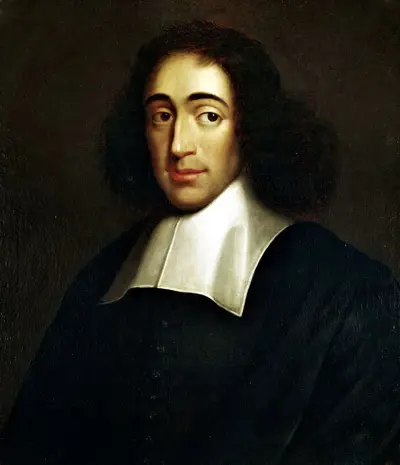
Baruch (de) Spinoza was a Dutch philosopher of Portuguese Sephardi origin. One of the early thinkers of the Enlightenment and modern biblical criticism, including modern conceptions of the self and the universe, he came to be considered one of the great rationalists of 17th-century philosophy. Inspired by the groundbreaking ideas of René Descartes, Spinoza became a leading philosophical figure of the Dutch Golden Age. Spinoza's given name, which means "Blessed", varies among different languages. In the Netherlands he used the Portuguese name Bento. In his Latin and Dutch works, he used Latin: Benedictus de Spinoza.
