HENRY L. DAWES
(Henry Laurens Dawes)
Commenting on the status of the Cherokee Indians.
This law provided for Individual Indian ownership of land which was seen as an essential step to stimulate assimilation of Indians into American society. For some it had that effect, but it also weakened the tribal community as the allotted land was then no longer controlled communality by the tribe and civil governance of the allotted lands were transferred to the state and local government and away from the traditional tribal government. In some cases traditional tribal government became impossible. Also, the Indians who were allotted the land could and often did sell it to whites. Land owned by Indians decreased from 138 million acres in 1887 to 48 million acres in 1934—a 65 percent reduction. This Act also imposed a patriarchal household onto many matrilineal Native societies, in which women had controlled property and descent, since under the sexist American law at that time all family property was owned and controlled by the husband. In 1934 President Franklin Delano Roosevelt supported the US Indian Reorganization Act. It ended allotment and created a "New Deal" for Indians, including renewing their rights to reorganize and form their own governments. Much of the damage of the Dawes Act had already been done however. See Senator Henry Moore Teller’s criticism of the Dawes Act {633120}.
Describing one of the anticipated benefits of the Allotment Act of 1881
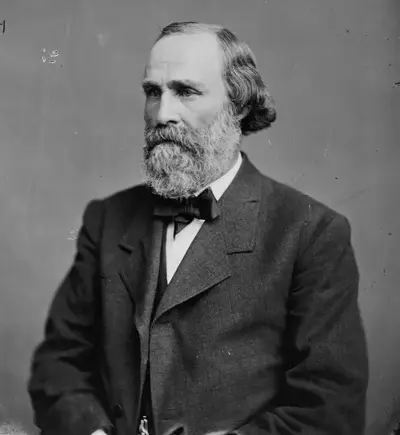
Henry Laurens Dawes was an attorney and politician, a Republican United States Senator and United States Representative from Massachusetts. He is notable for the Dawes Act (1887), which was intended to stimulate the assimilation of Native Americans by ending the tribal government and control of communal lands. Especially directed at the tribes in Indian Territory, it provided for the allotment of tribal lands to individual households of tribal members, and for their being granted United States citizenship. This also made them subject to state and federal taxes. In addition, extinguishing tribal land claims in this territory later enabled the admission of Oklahoma as a state in 1907.
