Henry L. Dawes Quotes
They have got as far as they can go, because they own their land in common .... there is no enterprise to make your home any better than that of your neighbors. There is no selfishness, which is at the bottom of civilization. Till this people will consent to give up their lands, and divide them among their citizens ... they will not make much more progress.
Commenting on the status of the Cherokee Indians.
Henry L. Dawes, 1816-1903, U. S. Congressman & U. S. Senator (Republican, MA), Speech, Lake Mohonk, 1883
Sourced by: Eigen's Political and Historical Quotations


Alexander Dubcek, Communist leader of Czechoslovakia, had pushed reform so far that 5 Soviet armies invaded. Dubcek was brought to Russia where he tried to persuade the Russian premier that the invasion was contrary to the principles of socialism.


The reason for the secrecy was that he was informing Congress of the Lewis & Clark Expedition. Potentially, the Spanish, English or French might try to interfere with the expedition which was the precursor to American domination of the entire continent. Unfortunately, Jefferson’s plan for the Indians was not supported by many other Americans with the exception of New York State and the Iroquois remaining after many left after supporting the British in the Revolution. But the Iroquois who remained were already farmers in fixed communities and were experienced traders. Further, they had a complex governmental structure with many elements of democracy, and several had already succeeded in European educational settings. Their successful integration with the rest of New York can be demonstrated by the fact that New York is the only state where the average Native American Income is the same as the average white income, and there is no Indian gaming in New York. Jefferson’s vision, unfortunately, was never implemented in early the Westward Expansion.

This quotation illustrates a very interesting historical fact about white understanding of Native American concepts of property and ownership. Here is a Scottsman before the American Revolution who is writing about American Indians and their communal concept of property. The “purchases” of Indian land from individual Indians therefore has even more doubt cast on the propriety than if the whites were acting in good faith. Furguson had personally visited North America for a brief visit.

Wayne played so many parts depicting whites in the process of expanding Westward that many people saw him as an expert on the history of the Westward Expansion. He did not comment on the whites who then kept huge ranches “selfishly” for themselves or those who selfishly would not share the mineral rich land that they had taken with anyone including the original Indian owners. So in this view, the Indians should have not been capitalists but they should have been socialists and shared their resources.

This is an important quotations for two reasons. First, one of the white Europan myths in the colonial era was that the Native America had not concept of land ownership and title. This quotation clearly refutes that/ Second, this shows that some Europeans coming to the new world opposed the view that the white Christians and a moral right to the Native American “heathen” land. A few like Williams did not.


Given the description and the time, the report probably was based on the Iroquois Indians in New York State. In 2000, while Native Americans had the lowest income and standard of living of any minority group in America. However, that year, in New York State, the average annual income of Indians was the same as that of whites.

This philosophical point of view is at odds with that of many Native Americans.

This law governed the territories outside of the original 13 colonies. The intentions of the founding fathers and the first Congress to the Indians was fair and honorable. However, there was no practical way that the new Federal Government could enforce this principle in the territories. A single greedy land speculator or trader could abuse a group of Indians and start a small war. The vast cultural differences between Indians and whites tended to polarize all violent conflicts regardless of who was at fault. The different perceptions of cruelty and atrocities further pushed the government to defend whites violating national policy and there was sufficient corruption and money to be made on Indian land and trading and things went downhill fast.
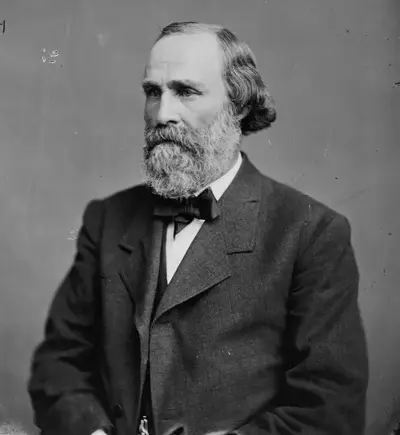
Henry Laurens Dawes was an attorney and politician, a Republican United States Senator and United States Representative from Massachusetts. He is notable for the Dawes Act (1887), which was intended to stimulate the assimilation of Native Americans by ending the tribal government and control of communal lands. Especially directed at the tribes in Indian Territory, it provided for the allotment of tribal lands to individual households of tribal members, and for their being granted United States citizenship. This also made them subject to state and federal taxes. In addition, extinguishing tribal land claims in this territory later enabled the admission of Oklahoma as a state in 1907.
