Frederick Jackson Turner Quotes
So long as free land exists, the opportunity for a competency exists, and economic power secures political power.
Turner, Frederick Jackson. "The Significance of the Frontier in American History." The Frontier in American History, Henry Holt and Company, 1920, p. 32.


Bevin urged greatly increased defense spending regardless of cost:

Muir had spoken at the Convention of Scottish Friends of the People at Edinburgh in 1792. He had advocated election reform allowing all men to vote, not just property owners and was sentenced by Braxfield to the Australian penal colony at Botany Bay. Braxfield expressed the deep distrust the establishment felt even for merchants, traders and others with fungible assets.


He was the Russian Reformer who ended serfdom and gave land to the peasants and then was assassinated. Ironically, both Alexander II and Lincoln were assassinated—because of their reform efforts—Lincoln for going too far; the Czar for not going far enough. See the Nickname that was given to the Czar: {622809}.


Many of the most liberated and accomplished women in history have been from wealthy families. And yet with all their money they could only go so far. They needed an entire movement of women of all classes—and men to finally attain suffrage and the progress made thus far. Wealthy women were very active, alongside with working and middle class women in most of the demonstrations and campaigns for women’s rights.
Nelson was referring to the past. The industrial revolution created other forms of wealth and power as a huge factory could be built on a small piece of land. In farming, the yield is proportional to the acreage tilled. Not so in manufacturing. With the knowledge era, intellectual property could produce much wealth and power, and factory size and land ownership was not necessary.
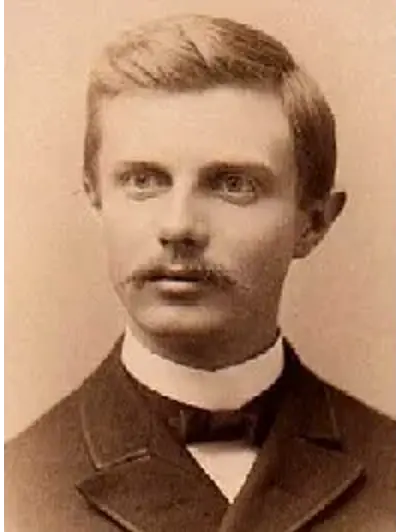
Frederick Jackson Turner was an American historian during the early 20th century, based at the University of Wisconsin until 1910, and then Harvard University. He was known primarily for his anti-Indigenous "Frontier Thesis". He trained many PhDs who became well-known historians. He promoted interdisciplinary and quantitative methods, often with an emphasis on the Midwest. His best known publication is his essay "The Significance of the Frontier in American History", the ideas of which formed the Frontier Thesis. He argued that the moving western frontier exerted a strong influence on American democracy and the American character from the colonial era until 1890. He is also known for his theories of geographical sectionalism. During recent years historians and academics have argued frequently over Turner's work; all agree that the Frontier Thesis has had an enormous effect on historical scholarship.
