William Darrah Kelley Quotes
Negroes would show themselves hardy children of toil once the freedman can feel that he is a man with a home to call his own, and a family around him, a wife to protect, children to nurture and rear, wages to be earned and received, and a right to invest his savings in the land of the country.
William Darrah Kelley, 1814-1890, U. S. Congressman (?, PA), Congressional Record, February 23, 1864
Sourced by: Eigen's Political and Historical Quotations


He was the Russian Reformer who ended serfdom and gave land to the peasants and then was assassinated. Ironically, both Alexander II and Lincoln were assassinated—because of their reform efforts—Lincoln for going too far; the Czar for not going far enough. See the Nickname that was given to the Czar: {622809}.
One of the most amazing things about Abraham Lincoln is the way he grew and matured over time. In 1854 he was not sure that the Negro could be the equal of the white. As he met more Black leaders, saw more, reflected more, and had more responsibility, he grew and developed his views on race. But it was statements like this that led to the great distrust that the very strong abolitionists like Wendell Phillips had in him.

After Nixon was elected, he never did very much to make Black Capitalism come to pass, but he did make the concept a more respectable idea and it has grown slowly since.
This marvelous quotation gives us a picture of the essence of the conflict in conception of freedom between Southern whites and negroes. There was no way to change the large majority of whites’ opinions and it is easy to see why Jim Crow and Southern discrimination evolved as it did. The emancipated Blacks had insufficient power or resources and there was not enough effort or success at changing white attitudes and no where near enough law enforcement to impose the view on the majority of the Southern white population.

Much of the South was so insular that people knew nothing about the notion of abolition and just assumed that no one would ever consider freeing the slaves. Many never knew that it was the South that first fired on the Union troops and flag. If the North won the war, the assumption was that Northerners would then own the plantations and the valuable slaves. In reality, while all slaves were emancipated in the South, very few plantations and farms were confiscated from their Southern owners by Northerners despite the fact that there was political pressure in the North to confiscate the land of all rebels who had committed treason and use the value to repay the Union bonds and care for the wounded Union veterans and the widows of dead Union Soldiers. Eggleston was an accomplished writer who had served in the Confederate army of the Civil War. 20 year after the war he wrote a series of articles for the prestigious Northern Atlantic Monthly trying to convey the war from the Southerner’s point of view.


This was one of the several early unofficial Emancipations that was issued in the Civil War.

Butler was at the time the Union general in charge of Louisiana. He had on his hand a large group of slaves whose owners had abandoned the area. There was no emancipation yet. He wrote for instructions. The result was the first actual emancipation of slaves.
Lincoln had promised amnesty to Southerners who would pledge loyalty to the Union. What many feared was that this would include slave owners re-enslaving their former "property," or that the government would allow them to do so in order to stop the rebellion.
It is not known what actually happened thereafter. However, from the intensity of this letter, it is likely that unless Rice was killed or wounded in battle, he went to get his daughter and deal with her “owner”. An interesting side note is that the slave owner actually sent the letter to the Commanding Union General Rosecrans complaining. The mental set of Southern Slave Owners was incredible to us today, but that is one of the reasons that Reconstruction was so difficult. Southerners could not see anything that they did that was wrong. Unfortunately, there are a few racist people with those views still in America plus many throughout the world.

Benjamin was the Confederacy’s strongest proponent for use of Negro troops in exchange for a promise of freedom. Ironically, the racial prejudice of the Southern soldier may well have doomed the South’s last chance for independence. Lee, although he personally favored such a course of action, could not get a general sentiment from the army as a whole.

The Freedmen’s Bureau was an institution established after the Civil War to provide assistance to the newly emancipated and free slaves. Every constructive step taken by the Bureau was opposed and obstructed by “unreconstructed” Southerners and some Northerners. They had very limited resources and there was little known technically about how to accomplish their mission. However, tens of thousands of individual new freed Negroes profited immensely and there were some systemic successes such as Du Bois describes Quotation 643644. There were also some failures as described herein.


By 1863, Negro troops were being used to fill in gaps in the Union forces. Many union generals resisted having colored troops under their command. Thomas, however, welcomed them, and won several major battles where black soldiers were instrumental in victory.

Johnson had a white mistress who accompanied him visibly at a time when Blacks were lynched for dating white women in many parts of the country. He was criticized heavily by whites for going with a white woman and many Blacks for the same.


Washington was from Virginia, the largest of the slave states, and he himself owned slaves. In his will he emancipated all his slaves. Most of his fellow Southern Slave owners however not only disagreed about the abolition of slavery but were adamant that slavery spread so that the abolitionists never attain a majority.
For more about the Bureau. See {629185}.and {629187}.


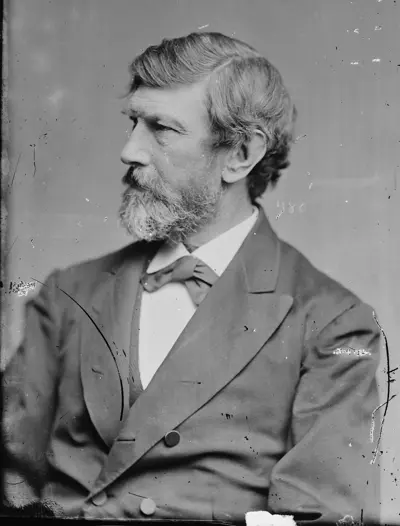
William Darrah Kelley was a Republican member of the U.S. House of Representatives from Pennsylvania. As an abolitionist, he was one of the founders of the Republican Party in 1854, and a friend of Abraham Lincoln. Kelley was a man of strict principles, advocating the recruitment of black troops in the civil war, and the extending of the vote to them afterwards. His belief in protective tariffs was so extreme that he refused to wear a single imported garment.
