Petrus Cunaeus Quotes
In Rome … insomuch as the citizen possessed land enough for [300 to farm], [citizens] were confined by Stolo’s Law to 500 acres per citizen.
Peter van der Kun. The Roman society had developed huge inequalities in the wealth of its citizens. Land was the measure of wealth as the value was produced by the farming of it. In an agrarian reform, the holdings of any one citizen was limited to 500 acres. In effect the Romans created a maximum of wealth. To the owners of the large tracts of land, this was a redistribution of wealth.
Petrus Cunaeus, 1586–1638, Dutch Historian, Quoted in Eric Nelson, The Hebrew Republic
Sourced by: Eigen's Political and Historical Quotations

In every society where there had been past unjust ownership of land, all efforts of land reform were faced with the problem of having to dispossess the current “owners” who themselves had not been guilty of the crimes of their ancestors in unjustly obtaining the land originally. In America land reform was unworkable in most cases and the solution was usually a large monetary payment as compensation for the land.


This was the basic document issued after the Russian Revolution establishing the basic legal and economic structure of the new Soviet State.

Use included renting it. What he opposed was simply holding land when whites were driving Indians off their lands because all the unused land outside of the reservation was owned by someone and the asking price was very high. Ingersoll was considered to be the greatest orator and political thinker of his day, but his overt atheistic views curtailed his elected political career.


His bill introduced in the House of Representatives. It did not pass.


At the time the number of small, independent land owners was diminishing.

The Roman Senate elected two Counsels who were the Executive of the State. Gaius Marius was elected Counsel 7 times making him perhaps the most popular politician of the ancient world. Prior to his law, only Roman men who owned sufficient land could join the army.

In Burundi, family land is divided among the male children of a family. The average Burundian woman has 6.3 children at that time, nearly triple the international fertility rate. With this population growth rate, the plots of land for each person inevitably get smaller and smaller over time. At 10,745 square miles, Burundi is slightly smaller than the U.S. state of Maryland, but it holds nearly twice as many people: about 10 million. The small plots of land are inefficient to farm and provide subsistence. So the nation was in a crises as there was little industrialization and land was essential for existence for most Burundians. See {35807} and {35808}.

The Bushmen are of the indigenous people of Botswana who have only had extended contact with the larger world recently.
Nelson was referring to the past. The industrial revolution created other forms of wealth and power as a huge factory could be built on a small piece of land. In farming, the yield is proportional to the acreage tilled. Not so in manufacturing. With the knowledge era, intellectual property could produce much wealth and power, and factory size and land ownership was not necessary.


This is a basic principle of English and American contract law.


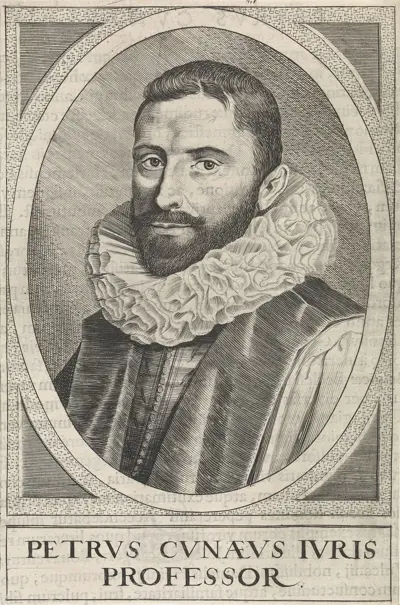
Petrus Cunaeus was the pen name of the Dutch Christian scholar Peter van der Kun. His book The Hebrew Republic is considered "the most powerful statement of republican theory in the early years of the Dutch Republic."
