Andrew Johnson Quotes
The homestead policy was established only after long and earnest resistance; experience proves its wisdom. The lands in the hands of industrious settlers, whose labor creates wealth and contributes to the public resources, are worth more to the United States than if they had been reserved as a solitude for future purchasers.
Johnson, Andrew. "First Annual Message." 4 Dec. 1865. A Compilation of the Messages and Papers of the Presidents, edited by James D. Richardson, vol. 6, Bureau of National Literature, 1897, p. 3560.


Use included renting it. What he opposed was simply holding land when whites were driving Indians off their lands because all the unused land outside of the reservation was owned by someone and the asking price was very high. Ingersoll was considered to be the greatest orator and political thinker of his day, but his overt atheistic views curtailed his elected political career.

While Turgot was right about so much, this was one of his big errors—the assumption that land was fundamental to and necessary for, wealth. In many countries it is still true, but of the recent billionaires like Warren Buffet, Bill Gates, Carlos Slim and most others, they own very little land. In the United States and Canada, there are large tracts of land that few or no one will buy and a cast majority of people do not make their living from land.


This was the basic document issued after the Russian Revolution establishing the basic legal and economic structure of the new Soviet State.


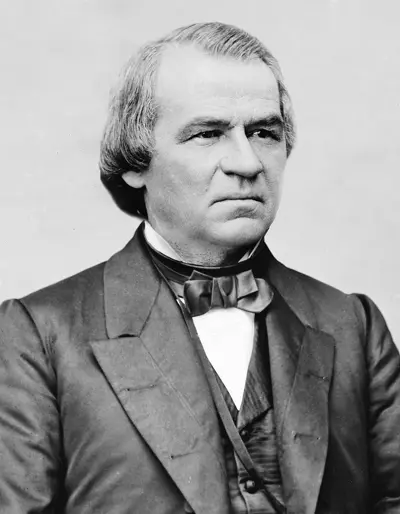
Andrew Johnson was the 17th president of the United States, serving from 1865 to 1869. He assumed the presidency as he was vice president at the time of the assassination of Abraham Lincoln. Johnson was a Democrat who ran with Lincoln on the National Union ticket, coming to office as the Civil War concluded. He favored quick restoration of the seceded states to the Union without protection for the former slaves. This led to conflict with the Republican-dominated Congress, culminating in his impeachment by the House of Representatives in 1868. He was acquitted in the Senate by one vote.
