John Locke Quotes
As much land as a man tills, plants, improves, cultivated, and can use the product of, so much is his property. He by his labour does, as it were, enclose it from the common.
Locke, John. Two Treatises of Government. Awnsham Churchill, 1690.


Use included renting it. What he opposed was simply holding land when whites were driving Indians off their lands because all the unused land outside of the reservation was owned by someone and the asking price was very high. Ingersoll was considered to be the greatest orator and political thinker of his day, but his overt atheistic views curtailed his elected political career.

This quotation illustrates a very interesting historical fact about white understanding of Native American concepts of property and ownership. Here is a Scottsman before the American Revolution who is writing about American Indians and their communal concept of property. The “purchases” of Indian land from individual Indians therefore has even more doubt cast on the propriety than if the whites were acting in good faith. Furguson had personally visited North America for a brief visit.

Paine, one of America’s founding fathers and the man most responsible for influencing Americans to revolt, is generally not given much attention in modern times. One of the main reasons was that his philosophy regarding land and land ownership is today considered socialist if not communist. Paine’s other views are mostly Apple pie American, but this is shocking to many Americans.

Essentially whereas many property owners have paid for their ownership in recent times, almost all real estate, wherever it is, that is privately owned was at some time in the past obtained by force, fraud, deceit, from someone else. In most cases, the owners who were killed, defrauded or otherwise removed from their land, had previously killed, defrauded or otherwise removed owners before them. There is almost no guilt untainted land. This was not just a product of capitalism, but has been a factor in every ism that has governed human society.


The Romans were very organized regarding land ownership. When they conquered Africa, defeating Carthage, they found no written records of land ownership, no deeds, no bills of sale. Therefore, they opened up the entire land mass of Africa for what amounted to public colonization where the land could be worked and claimed legally. Illiterate Africans had no written records, and most areas where under the control of a strongman who “owned” all of the land with no notion of private ownership of land.

This was the basic document issued after the Russian Revolution establishing the basic legal and economic structure of the new Soviet State.

This philosophical point of view is at odds with that of many Native Americans.


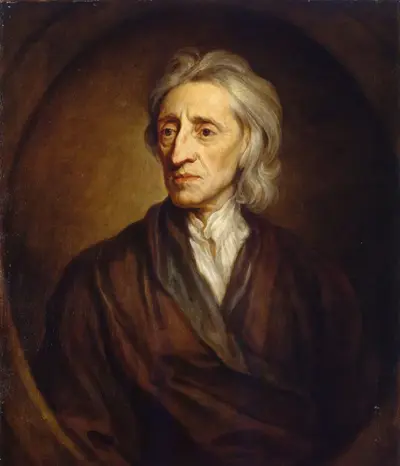
John Locke FRS was an English philosopher and physician, widely regarded as one of the most influential of Enlightenment thinkers and commonly known as the "Father of Liberalism". Considered one of the first of the British empiricists, following the tradition of Sir Francis Bacon, Locke is equally important to social contract theory. His work greatly affected the development of epistemology and political philosophy. His writings influenced Voltaire and Jean-Jacques Rousseau, and many Scottish Enlightenment thinkers, as well as the American Revolutionaries. His contributions to classical republicanism and liberal theory are reflected in the United States Declaration of Independence.
