Henry Knox Quotes
Our political machine, composed of thirteen independent sovereignties, have been perpetually operating against each other and against the federal head ever since the peace.


Each of the Dutch provinces and towns was relatively independent with no central or federal government that could organize or bring consistency to Holland. Each city and community had their own military with no common command, training, logistics, weapons or other common elements that the times began to require. The representatives from Rotterdam made this public declaration for a unified—federal—government.

The Vice President and the President were at odds over the theory of “nullification” by which the states could supersede and nullify federal law of action in their states. The President had just given a toast to the Preservation of the Union (See {587324}). So Calhoun embellished upon it and gave this toast. The President then strengthened the version of his toast that was given to the press so that it was clear that he did not support his Vice President’s position on nullicication.

Not only did the people in Afghanistan have very little experience with central government, but they had little history of government of any sort. There were loose tribes somewhat unified by culture, but there was little or no tribal government. The same with clans. Each Afghanistan male was his own ruler over his wives and children in a family centric society. While virtually all were Muslim, there was no hierarchy or structure of the clergy in that society.

The Grammar Curmudgeon. In most states there is a parallel question of the State government and the local government balance of powers.

Commonly referred to as the Kentucky Resolution. This concept of Nullification was one of the factors that aggravated the tensions leading to the Civil War. Were the individual States to be the arbiters of whether or not a Federal act was Constitutional or was it to be the Supreme Court.


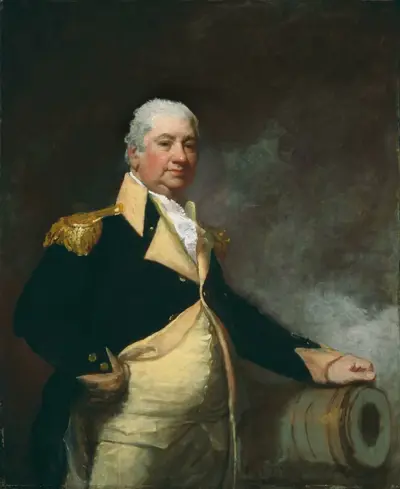
Henry Knox was a military officer of the Continental Army and later the United States Army, who also served as the first United States Secretary of War from 1789 to 1794.
