Helen Keller Quotes
Our democracy is but a name. We vote? What does that mean? It means that we choose between two bodies of real, though not avowed, autocrats. We choose between Tweedledum and Tweedledee.…
Helen Keller was a remarkable woman who was blind and deaf, and yet she became a great orator and social reformer.
Helen Keller, 1880-1968, Social Reformer & Feminist, Letter published in the Manchester Advertiser March 3, 1911
Sourced by: Eigen's Political and Historical Quotations


He was referring to Russian elections. The reasons that elections in Russia are not necessary for legitimizing state power to be used by the current government, is that from the early days of the Russian Czars, the tradition and culture assumed that if there is a threat to "Mother Russia", everyone and everything in the state is at the disposal of the government, no matter who is in power. It is so strongly embedded in the culture that although many Russians want fee elections and the right to choose their leaders, they have no question that the government alway has the right and duty to marshall amm the human and physical resources to protect the state, See Quotation 644072 for more on this imporatnt concept in Russia.


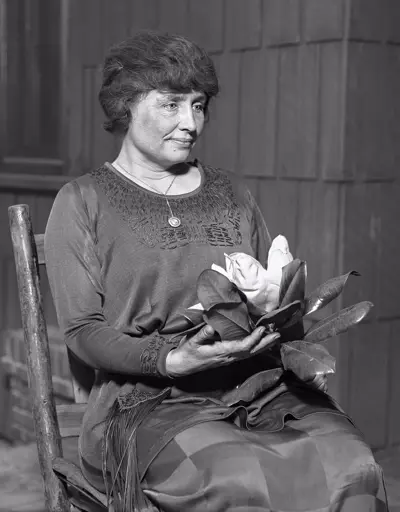
Helen Adams Keller was an American author, disability rights advocate, political activist and lecturer. Born in West Tuscumbia, Alabama, she lost her sight and hearing after a bout of illness at the age of nineteen months. She then communicated primarily using home signs until the age of seven when she met her first teacher and life-long companion Anne Sullivan, who taught her language, including reading and writing; Sullivan's first lessons involved spelling words on Keller's hand to show her the names of objects around her. She also learned how to speak and to understand other people's speech using the Tadoma method. After an education at both specialist and mainstream schools, she attended Radcliffe College of Harvard University and became the first deafblind person to earn a Bachelor of Arts degree. She worked for the American Foundation for the Blind (AFB) from 1924 until 1968, during which time she toured the United States and traveled to 39 countries around the globe advocating for those with vision loss.
