Earl Warren Quotes
The right to vote freely for the candidate of one’s choice is of the essence of a democratic society, and any restrictions on that right strike at the heart of representative government
Earl Warren, 1891-1974, Chief Justice, U.S. Supreme Court, Governor of California (Republican), Republican Vice Presidential Candidate (with Dewey), 377 U.S.
Sourced by: Eigen's Political and Historical Quotations


America is almost unique among nations in that the methods of elections are different in each state, but at the time even the right to vote was uniquely controlled by the states—even for Federal officials. Even in modern times individual states have controlled the right to vote in many instances. For example in some states convicted felons may not vote while in others they can.


The voting problems we have had are managerially and technology solvable but politically each solution is perceived as favoring one of the political parties in the particular jurisdiction and therefore there is resistance to the change.

1st Baron Macaulay. Macaulay was opposed to universal suffrage, and when John Stuart Mill and others started a movement for allowing all males to vote, this was one of the tactics to stave off allowing the lower classes to vote.


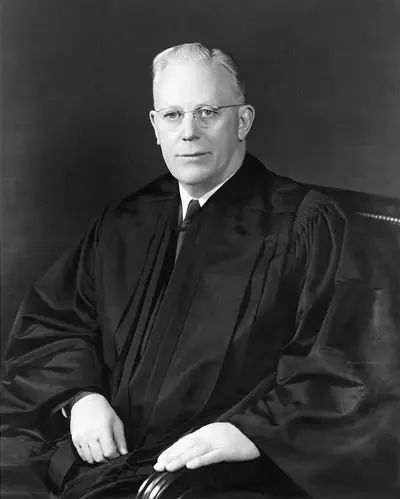
Earl Warren was an American politician and jurist who served as 30th governor of California from 1943 to 1953 and Chief Justice of the United States from 1953 to 1969. The "Warren Court" presided over a major shift in American constitutional jurisprudence, which has been recognized by many as a "Constitutional Revolution" in the liberal direction, with Warren writing the majority opinions in landmark cases such as Brown v. Board of Education (1954), Reynolds v. Sims (1964), Miranda v. Arizona (1966) and Loving v. Virginia (1967). Warren also led the Warren Commission, a presidential commission that investigated the 1963 assassination of President John F. Kennedy. He is the last chief justice to have served in an elected office before entering the Supreme Court, and is generally considered to be one of the most influential Supreme Court justices and political leaders in the history of the United States.
