Lyman Trumbull Quotes
The right to vote ... depends on the legislation of the various States
America is almost unique among nations in that the methods of elections are different in each state, but at the time even the right to vote was uniquely controlled by the states—even for Federal officials. Even in modern times individual states have controlled the right to vote in many instances. For example in some states convicted felons may not vote while in others they can.
Lyman Trumbull, 1813-1896, U. S. Senator (Republican, Democrat & Liberal Republican, IL), Senate Debate on the Override of President Andrew Johnson’s Veto of the Civil Rights Act of 1866
Sourced by: Eigen's Political and Historical Quotations

At the time, this not only was true but there were few who argued that it should be different. It was the gross abuse of the control of the elective franchise by the Southern states after Blacks had been given the right to vote and continuing into the 1960s, that the Federal Government passed the Voting Rights Act. In the election of 2000, Al Gore had won by a narrow margin as the result of decisions of the Florida Courts finding that Gore had won the state, The Supreme Court, however, overrode Florida and by a 5-4 partisan vote gave Florida and hence the election to George W. Bush. Bingham’s principle had fallen completely.


Even after the South was defeated in the Civil War, most Southern politicians strove to keep the newly freed Blacks from voting. The vehicle they chose to attain that purpose was the concept of States’ Rights where the states were the sole determiners of who could and could not vote. The majority of the country rejected that view and the Constitution was amended to allow Black men to vote. After reconstruction Black voting in the South was curtailed substantiality by devices such as poll taxes and literacy requirements and terror and intimidation. It was not until the latter part of the 20th century that most Blacks could vote in the Southern States.

The voting problems we have had are managerially and technology solvable but politically each solution is perceived as favoring one of the political parties in the particular jurisdiction and therefore there is resistance to the change.


In the beginning of the 21st century, many republican state legislatures attempted to change the voting laws to eliminate the possibility of voter fraud which was not a serious practical problem in America. However, a consequence—some argue indented and some argue unintended—was that it was harder for certain groups of people to meet the new requirements and therefore was a de facto voter suppression for some people such as the very elderly, the homeless, and the poor. Many of these efforts were declared unconstitutional by the courts.
At the time Negroes were prohibited from voting by a series of discriminatory criteria for voter registration and intimidation so that Blacks would not generally even try to register. But the Civil Rights movement changed tactics and organized large scale attempts at voter registration. Mayor Thompson and the white power structure of the town were not going to allow that. They had not only enlarged the police department but the city purchased an a small armed tank.


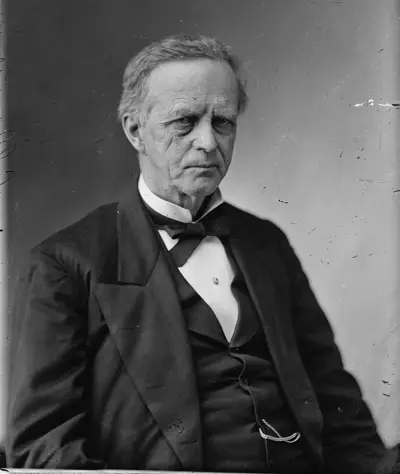
Lyman Trumbull was a United States Senator from Illinois and the co-author of the Thirteenth Amendment to the United States Constitution.
