Alexander H. Stephens Quotes
The question of suffrage, whether universal or restricted, is one of State policy exclusively.
Even after the South was defeated in the Civil War, most Southern politicians strove to keep the newly freed Blacks from voting. The vehicle they chose to attain that purpose was the concept of States’ Rights where the states were the sole determiners of who could and could not vote. The majority of the country rejected that view and the Constitution was amended to allow Black men to vote. After reconstruction Black voting in the South was curtailed substantiality by devices such as poll taxes and literacy requirements and terror and intimidation. It was not until the latter part of the 20th century that most Blacks could vote in the Southern States.
Alexander H. Stephens, 1812-1883, U. S. Congressman (Whig, later Democrat, GA), Vice President of the Confederate States of America, Governor of Georgia, On Reconstruction, April 11, 1866
Sourced by: Eigen's Political and Historical Quotations


At the time, this not only was true but there were few who argued that it should be different. It was the gross abuse of the control of the elective franchise by the Southern states after Blacks had been given the right to vote and continuing into the 1960s, that the Federal Government passed the Voting Rights Act. In the election of 2000, Al Gore had won by a narrow margin as the result of decisions of the Florida Courts finding that Gore had won the state, The Supreme Court, however, overrode Florida and by a 5-4 partisan vote gave Florida and hence the election to George W. Bush. Bingham’s principle had fallen completely.


America is almost unique among nations in that the methods of elections are different in each state, but at the time even the right to vote was uniquely controlled by the states—even for Federal officials. Even in modern times individual states have controlled the right to vote in many instances. For example in some states convicted felons may not vote while in others they can.


He was referring to Negroes who did not then have the fight to vote.


1st Baron Macaulay. Macaulay was opposed to universal suffrage, and when John Stuart Mill and others started a movement for allowing all males to vote, this was one of the tactics to stave off allowing the lower classes to vote.


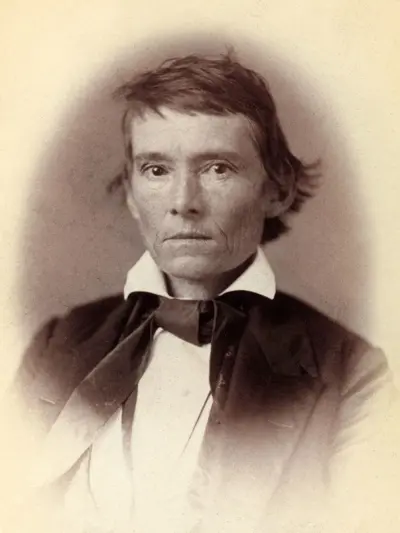
Alexander Hamilton Stephens was an American politician who served as the vice president of the Confederate States from 1861 to 1865, and later as the 50th governor of Georgia from 1882 until his death in 1883. A member of the Democratic Party, he represented the state of Georgia in the United States House of Representatives before becoming governor.
