Yasser Arafat Quotes
Our basic aim is to liberate the land from the Mediterranean Seas to the Jordan River …. The Palestinian revolution's basic concern is the uprooting of the Zionist entity from our land and liberating it.
Yasser Arafat, 1929-2004, Chairman, Palestine Liberation Organization, 1970
Sourced by: Eigen's Political and Historical Quotations

It was speeches like this which created a distrust of the Palestinian intentions when there were negotiations of land for peace. Worry that peace was just a pretext for war or takeover, inhibited many Israelis from wanting to give up anything unless they could get a more reliable partner. The Palestinians had a traditional fertility rate that was several times that of the Israelis.


This statement hardened the Israeli population away from anything that would bring Hamas more power. The PLO leader had, for ALL the Palestinian people, recognized the right of Israel to exist {633062}. Now Hamas was not only reneging on the Arafat declaration, but also would not even use the term “Israel” and instead calls the nation which in less time than the Palestinians have had, has developed a modern, industrial, democratic state far in advance of the Palestinians or any of the Arab nations for that matter. Yet it is relegated to a “project” with the great hope of having it come to an end—the destruction of Israel. The Israelis observe that this is a de facto declaration of war, and hence treat Gaza and Hamas as an enemy force to be reckoned with. See {635338} for another alarming reneging of the recognition of Israel.

At that time Jews in Palestine were in the minority. The issue of how to obtain the land was hotly debated amongst Jewish groups. Jabotinsky was at one extreme—colonize and take the land just as the Arabs had done to the Jews when there was a Jewish majority. His view did not however prevail. The policy was to buy the land from individual Arabs and Jewish land up to 1948 was obtained that way. In that year the UN partitioned Palestine and 11 Arab armies attacked the new state of Israel and asked the Arab civilians to leave the area so that the Army could cleanse it of Jews. Many did not, and they or their descendants are still on their land or have sold it. The Arabs who left, were suspected of being possible collaborators or terrorists, and they have never been paid for their land or allowed to return. Compensation is still in dispute. At the same time Jews driven out of Arab countries by law and the military have never been compensated or given any right of return either.

The PLO and most of the Arab nations, took the position that the United Nations original partition of Palestine into a Jewish and a Palestinian nations -- UN General Assembly Resolution 181 – was “illegal”. That view has served as the basis for the Arab Israeli problems since. The basis of the illegality they claimed was the right of the Palestinians to self determination. However, it is a right which they deny to the Jews living in Palestine who also had a right to self determination. The UN solution was to partition the land into two nations so that the each had the right of self determination. However, the Arab leadership wanted only Arabs to have the right of self determination.


Just before the Six Day War. Syria did take the initiative and provoked the war which the Arabs lost badly. Ironically, Egypt and Jordan, pushed into the war by Syria, lost the most in manpower and territory.

Commenting on Israel's right to exist:

At the time YaAlon was Rabin’s Chief of Intelligence.
_0_thumbnail_47x47.jpg)


When the United Nations partitioned Palestine into a Jewish and a Palestinian State the Arab Countries all jointly attacked the fledgling Jewish State of Israel. Despite the Israeli’s being overwhelmingly out numbered in man and weapons, they beat back the invaders. However while many Arabs stayed on their Israeli land and some helped the Jews defend against the Arab Armies some abandoned their homes and land and went to neighboring Arab Counties. This is what they had been asked to do by the Arab governments who wanted to be able to attack communities without worrying about killing Arabs. To spur the evacuation the spread false propaganda about Israeli atrocities and frightened them into leaving. As a motivation to leave they were told that they could move into the Jewish lands and property when the Jews had been driven out. To make matters worse, some Israeli radicals repeated the lies to induce the Arabs to abandon their lands. In at least one case Arabs who stayed were subjected to violence. After the defeat of the Arabs, the Israelis had a dilemma in that they could not tell which Arabs were residents who had just been frightened and which had fought on the Arab side or helped the invaders. The result was that with few exceptions, the Arab refugees were not allowed back. Meanwhile, the Arab countries would not allow the refugees to settle and become citizens of the Arab countries (except for Jordan). The Palestinian refugees were a particularly fertile population and were cared for by the United Nations and have multiplied to many times their original size maintaining a continuous festering problem.


This quotation was very important to the issue of Freedom of the Press in America in the early 21st century. Al Jazeera was an independent Qatar News Network founded in 1996 and was heavily viewed throughout the Middle East. They then started an English Language Channel. Despite some very innovative News Reporting and access that other news networks were not able to get, there were many areas and cable networks in the United States (and other countries) that would not broadcast Al Jazeera. Their reason was twofold: First, that the English version was generally very moderate and responsibly designed to create a favorable opinion of the Arab World in the Middle East. However, for the Arabic, original channel, the broadcasts are extremely inflammatory with regard to Islam and the West and the Israeli-Arab Conflict. Second, that key Al Jazeera officials were supporters of terrorism and subtly were advocating terrorism in their broadcasts in English, and overtly in Arabic. These quotations by the Chief Editor, established that he had a strong political point of view and justified and advocated Palestinian terrorism. Most news network chief editors, have political opinions of one kind or another but are careful to keep them private. The fact that Sheikh did not, and supported the deliberate. Intentional killing of innocent women and children caused most American and many other networks to refuse to carry Al Jazeera despite the excellent journalism they had in other areas. Al Jazeera in its Arab version has never reported that the number of Palestinians killed by Israelis is far fewer than other historical occupations of similar length. For terrorist acts, even murder, Israel does not have capital punishment. Over the years, the Jordanians and Syrians have killed many more Palestinians than Israel has in all the occupation. Likewise the PLO, Hamas and other Palestinian organizations have deliberately murdered more Palestinians than the Israelis have inflicted casualties over the years. After the Arabs refused to accept the United Nations 1949 decision to partition Palestine, the Arab nations attacked the Jews with over a dozen Arab Armies. Over the years, Israel has negotiated a peace treaty with Egypt and Jordan, but the Palestinians have always refused to even sit down and negotiate an overall treaty.

Despite the fact that there were no formal political polls at the time, public opinion was very influential in curtailing what might be a tendency to use of the American military. Starting with the Cold War later, Presidents tended to use American military force regardless of public opinion or would exaggerate or lie (Vietnam and Iraq wars for example) to temporally gain some public support.

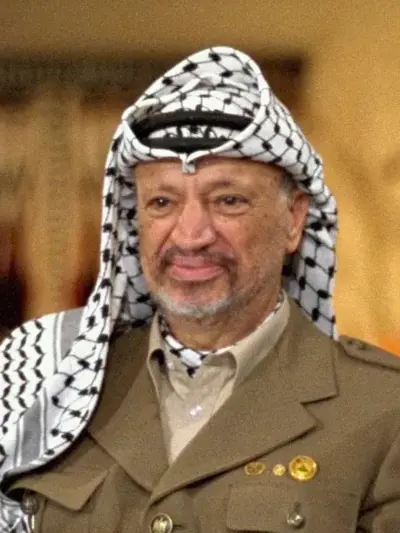
Mohammed Yasser Abdel Rahman Abdel Raouf Arafat al-Qudwa al-Husseini, popularly known as Yasser Arafat (Arabic: ياسر عرفات, romanized: Yāsir ʿArafāt) or by his kunya Abu Ammar (Arabic: أبو عمار, romanized: ʾAbū ʿAmmār), was a Palestinian political leader. He was Chairman of the Palestine Liberation Organization (PLO) from 1969 to 2004 and President of the Palestinian National Authority (PNA) from 1994 to 2004. Ideologically an Arab nationalist, he was a founding member of the Fatah political party, which he led from 1959 until 2004.
