Sari Nusseibeh Quotes
The Jew seeks space to continue living, while the Arab defends his space to the death.
Sari Nusseibeh, Palestinian Essayist & PLO Representative in Jerusalem, President of Al Quds University, Once Upon a Country: A Palestinian Life, 2007
Sourced by: Eigen's Political and Historical Quotations

It was speeches like this which created a distrust of the Palestinian intentions when there were negotiations of land for peace. Worry that peace was just a pretext for war or takeover, inhibited many Israelis from wanting to give up anything unless they could get a more reliable partner. The Palestinians had a traditional fertility rate that was several times that of the Israelis.

This statement hardened the Israeli population away from anything that would bring Hamas more power. The PLO leader had, for ALL the Palestinian people, recognized the right of Israel to exist {633062}. Now Hamas was not only reneging on the Arafat declaration, but also would not even use the term “Israel” and instead calls the nation which in less time than the Palestinians have had, has developed a modern, industrial, democratic state far in advance of the Palestinians or any of the Arab nations for that matter. Yet it is relegated to a “project” with the great hope of having it come to an end—the destruction of Israel. The Israelis observe that this is a de facto declaration of war, and hence treat Gaza and Hamas as an enemy force to be reckoned with. See {635338} for another alarming reneging of the recognition of Israel.

To make matters worse for the Muslims, the tiny foreign entity in their midst—populated by "heathens who do not follow the command of God"—have created a much higher standard of living for their people, improved the land and its productivity in ways that have been far superior to traditional Islamic methods, reclaimed much of the desert that the Muslims could not, and produced a military that has staved off the hostilities of all of Islam, and has done all this without any oil or other natural resources to sell. Israel is a living counter-example to the superiority of Islam and its traditions which is so important to Muslims.

At that time Jews in Palestine were in the minority. The issue of how to obtain the land was hotly debated amongst Jewish groups. Jabotinsky was at one extreme—colonize and take the land just as the Arabs had done to the Jews when there was a Jewish majority. His view did not however prevail. The policy was to buy the land from individual Arabs and Jewish land up to 1948 was obtained that way. In that year the UN partitioned Palestine and 11 Arab armies attacked the new state of Israel and asked the Arab civilians to leave the area so that the Army could cleanse it of Jews. Many did not, and they or their descendants are still on their land or have sold it. The Arabs who left, were suspected of being possible collaborators or terrorists, and they have never been paid for their land or allowed to return. Compensation is still in dispute. At the same time Jews driven out of Arab countries by law and the military have never been compensated or given any right of return either.

A major issue amongst Israeli’s is to how they should relate to those hostile Islamic nations in their area who claim they are at war with Israel or the Jewish People. This position in effect says that the oratory of those Islamic groups that claim that they are in a war—a holy war even—should be taken at their word and treated as a wartime enemy and Israel should actively attempt to kill and destroy them.


Mohamed Anwar El-Sedat

Just before the Six Day War. Syria did take the initiative and provoked the war which the Arabs lost badly. Ironically, Egypt and Jordan, pushed into the war by Syria, lost the most in manpower and territory.


”Palestine” to the Arabs of the area meant the territory of the West Bank, Gaza, and Israel itself. They wanted to expel the Jews and or take over the whole area as a single state—Palestine—with an Arab majority. With the Israeli Defense Forces successes under Dayan, this notion of Palestine was “finished”. The notion of a Palestinian State which included the West Bank and Gaza but not Israel was then negotiated and these negotiations were ongoing for years. Minorities of Arabs and Israelis did not want to see a any Palestinian state that did not include Israel proper, and they blocked it whenever they could.

This statement hardened the Israeli population away from anything that would bring Hamas more power. The PLO leader had, for ALL the Palestinian people, recognized the right of Israel to exist {633062}. The Israelis observe that this is a de facto declaration of war, and hence treat Gaza and Hamas as an enemy force to be reckoned with. See {635341} for another alarming reneging of the recognition of Israel.

A minority of Jewish Israelis do not recognize the United Nations 1949 partition boundaries of the land creating modern Israel. They believe that God gave all the land to the Jewish people—as described in the Bible. Therefore, to them, the West Bank is a part of Israel. No Israeli government has ever maintained that position. However some governments which depend on settler and ultra-Orthodox support do not publicly disavow the position. Palestinians, look with alarm, on this view and the constant attempts at encroachment on West Bank land that the settlers attempt. Like the extremist Palestinians who want to sabotage any two-state solution, there is a minority of Israelis who do the same. These two groups made the peace process very difficult as their adherents are not only very passionate about their views, but have political influence out of proportion to their relatively small number of voters.
_0_thumbnail_47x47.jpg)


The pre WWII Zionists who returned to the Holy Land brought with them, the education, culture, technology, and particularly the modern scientific methods of agriculture and irrigation. The Arabs lived the same way as they had done since 1100 when the Muslim world "closed" to new ideas and change. At that earlier time, the Arabs had the advanced agricultural techniques which Europeans copied throughout Spain and Italy. While advanced for 1100, Arab agriculture was backward by early 20th century standards. Arab farms could mostly just feed the land owning family and produced little surplus, and they wasted huge amounts of water in the process. The returning Jews assumed that the Arabs would welcome these new techniques as well as the public health, medicine, engineering and science. They thought that they were bringing great gifts to the non-Jewish inhabitants of the land. However, even though the Jewish farms improved the quality of the produce and increased the productivity many times with much less water needed, for the most part, the Arabs would not depart from their traditions and religious dictates. One of the reasons Islam had been so successful in its inception was that it prescribed behavior in every phase of life, not just religious. But then it became very difficult to change. So the benefit that the Zionists thought that they were bringing back to the Middle East were not seen as benefits by the Arabs whose various cultures and countries have remained religiously and tradition bound even into the 21st century.

There were Arabs living in Palestine since Roman times. However, there was no concept of Palestinians as a separate people from Jordanians or other Arabs in the Middle East. There had never been a Palestinian government separate from the other Arabs in the region and separate from the Kingdom of Jordan. At the birth of Israel, all the Arab Armies of the region attacked the new state, which managed to defend itself but in the process the Arab governments had told the Arabs of Israel to leave the Area so their Armies would be able to attack all others. After the Arab victory, they could return and could have their land and the Jewish land. The victory never happened and the Arabs who left have been refugees outside of Israel and describe themselves as “Palestinians” which have had a quasi government in the PLO. The Palestinians who stayed in Israel became full citizens of the Jewish State. Other Palestinian refugees left the area and emigrated throughout the Middle East and elsewhere.

This was one of the most accurate foreign policy assessments ever made. The next year the first Arab-Israeli war began when the state of Israel came into being. See {624566} for another accurate prediction.
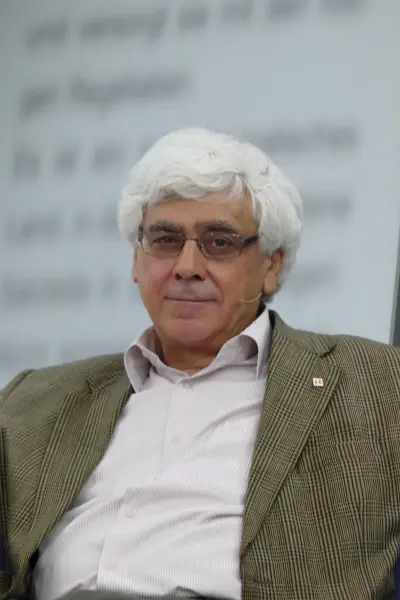
Sari Nusseibeh (Arabic: سري نسيبة) and Foreign Policy (United States). He lives with his family in Beit Hanina.
