William E. Dodd Quotes
Now it’s too late!
Dodd, in Berlin from 1933 to the onset of WWII, was able to see first hand what Hitler and the Nazi Movement was really like, Although he for the United States and Churchill for England warned early on, the politics of the times would not allow any action to stop or curtail Hitler. America, in particular, had a strong isolationist Republican wing and in addition, a small but loud core of pro Fascist, Hitler admirers such as Charles Lindburg, Father Coughlin, and Henry Ford. America had virtually no serious military capacity at the time, and with the Depression, FDR had all he could do to just gradually build up the military. By the time the Democracies realized that Dodd and Churchill were right, it was too late to prevent WWII. Dodd died in 1940 just when it was clear that he had been right.
William E. Dodd, 1869-1940), Historian & U. S. Ambassador to Germany (Democrat), Statement after Nazi Germany Invaded Poland, 1940
Sourced by: Eigen's Political and Historical Quotations


“Lebensraum” was a German expansionist concept of the time which has no good English translation. Literally, it means “living room”. The Germans had this notion that the German race and nation had to have more land to accommodate the growth of the German people. And because the Germans were a superior race, they were entitled to the land surrounding Germany in which to have Germans grow and thrive. The “inferior” peoples who lived on the land could be exterminated so that Germany would have this expansion room. The “Death’s Head units” were special German elite troops who used the Death’s Head as a symbol on their uniforms. Some of the Generals were concerned that the rest of the world would condemn Germany and possibly interfere if they exterminated the Poles. Hitler pointed to the example of the Turks who had killed most of the Armenians in the Armenian Genocide in the early 20th century. They got away with it with no outside interference, and there were no international consequences for Turkey. Hitler, convinced that the Armenian genocide was the precedent, thought Germany could easily get away with murdering the Gypsies, seriously handicapped, homosexuals, Russians, Poles and Jews. For other quotations on the Armenian Genocide, see {51838}, {638251}, {620602}, {620603}, {620604}, {620605}, {620600}, and {620606}

The then Attorney General had established a back channel to the Russian agent. There was genuine fear by the Russians and some in America that there were still many Nazis and German nationalists who would try and influence, if not take over, German politics to produce another aggressive German fascist state. The Russians had lost 22 million citizens to the Germans in the war and had faced a defeated Germany where virtually every German over the age of 30 had been cheering for and supporting Hitler a decade ago. Neither the Russians nor we and the other allies had not yet seen the remarkable turn-around that the German nation would make and the intense anti-fascist, non-military ethos that would be brought by the younger German generations. The direction of Germany was then very unpredictable.


That day, Hitler had made a very aggressive speech with ominous war threats. The Prime Minister sent this cable initiating a meeting in Munich which would do no good but would culminate with his famous naïve quotation that would define him for history. See {585941}.

Cooper had resigned from the government after Prime Minister Neville Chamberlain returned from his meeting with Hitler with the naïve view that peace could be made with Germany. There was a significant pro-Fascist, Nazi sympathetic segment of British society including the former King, the Duke of Winsdor, who were in favor of making an alliance with Hitler and not opposing the Nazi “reform” of Europe. Surrender was his word for their alternative.
Roosevelt had withdrawn his Ambassador to Berlin, publicly reprimanded Joseph P. Kennedy, his Ambassador to England who was pro Fascist and who had said complementary things about Hitler and Mussolini. FDR made anti-German statements to a degree unknown for a country not at war. Hitler publically stated that the Germans would not be pressured. Dictators who U. S. leaders have tried to isolate and pressure, have made similar statements ever since. The American intervention was certainly effective against Hitler.

This telegram was one of the more bizarre episodes leading up to WWII. The “solution” that Rothermore was praising was the German Army seizing and occupying a large part of Czechoslovakia – the Sudetenland -- in violation of the WWI Peace Treaty that Germany had signed. Further, Rothermere knew perfectly well that England and France were bound by treaty to come to the military aid of Czechoslovakia and war between Britain and Germany could break out at any moment. Yet he sent the telegram encouraging Hitler in his aggression. The Daily Mail, Rothermore’s very conservative newspaper supported English Fascist Oswald Mosley and wrote articles favorable to Mussolini and Hitler. There was a small but powerful part of English Aristocracy who were pro German and pro Fascist including the King, Edward, Duke of Windsor {584507} who was persuaded to abdicate and relegated to the Bahamas where his views were not so public. The Daily Mail catered to that part of the English Aristocracy.

During WWII, he ignored and defied the orders of his own government to issue no visas for the safety of war refugees fleeing from invading German military forces in the early years of World War II. Between June 16 and June 23, 1940, he frantically issued Portuguese visas free of charge, to over 30,000 refugees seeking to escape the Nazi terror, 12,000 of whom were Jews who were thus saved from murder. He was fired by the Portuguese dictator and spent the remainder of his life in disgrace and poverty. In 1966 Sousa Mendes was honored at Israel's Yad Vashem memorial to the Holocaust as one of the "Righteous Among The Nations," Also in 1987, the Portuguese Republic began to rehabilitate Sousa Mendes' memory and granted a posthumous Order of Liberty medal,

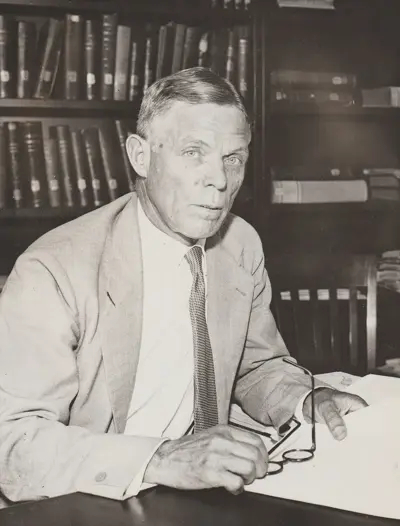
William Edward Dodd was an American historian, author and diplomat. A liberal Democrat, he served as the United States Ambassador to Germany from 1933 to 1937 during the Nazi era. Initially a holder of the slightly Antisemitic notions of his times, he went to Germany with instructions from President Franklin D. Roosevelt to do what he could to protest Nazi treatment of Jews in Germany "unofficially," while also attempting to follow official State Department instructions to maintain cordial official diplomatic relations. Convinced from first hand observation that the Nazis were an increasing threat, he resigned over his inability to mobilize the Roosevelt administration, particularly the State Department, to counter the Nazis prior to the start of World War II.
