William C. Bullitt Quotes
It may be that at a given moment I, as the only representative of the Diplomatic Corps remaining in Paris, will be obliged in the interests of public safety to take control of the city pending arrival of the German army. I shall do my best to save as many lives as possible and to keep the flag flying…. I want to take this opportunity to thank you for your friendship in case I get blown up before I see you again. [Meanwhile,] Here I am. Here I stay.
A few days before the Germans had bombed a few places around Paris. The French President and high officials after stating that they would defend the city against the Nazis ran out of town to the South. Then the city officials all ran including most of the police officers. All the foreign diplomats followed except for Ambassador Bullitt, a close personal friend of President Roosevelt. When he sent this cable, he and his staff had 2 revolvers and 40 bullets and asked FDR to send him some sub-machine guns to help him maintain order in the city. When the Germans arrived, there was not a single Frenchman who tried to stop them. The French Army had already run from the Battlefield outside of Paris. It is this dreadful, cowardly showing of the French which plagued De Gaulle and other French Patriots for years causing a great exaggeration of the extent of the French Resistance which was indeed heroic but only involved few Frenchmen and women. Fortunately, there was almost no looting of civil breakdown and the Germans arrived and took over. Bullitt never had to use his “armaments”.
William C. Bullitt, 1891-1967, U. S. Ambassador to France and Russia, Cable to President Franklin Delano Roosevelt, June 1940
Sourced by: Eigen's Political and Historical Quotations

Many of the workers never returned.

He had been part of a plot to assassinate Adolf Hitler. There were a small group of Anti Nazi Germans during WW II. Carnaris was one. Most were killed.

Explaining the reason for the Paris insurrection against the occupying Germans in World War II in contrast to the general French collaboration and capitulation. The French army, which was larger than the German, put up minor resistance and capitulated quickly when the Germans invaded. A number of French leaders formed a Nazi puppet government in Vichy. Many Frenchmen collaborated with the German Nazis. One of the main reasons for the formation of the French Resistance movement was for the French to have any honor after the war was over. They wanted the world to know that there were Frenchmen who valued freedom and justice and were not cowards--there were French who would risk their lives for freedom and justice. The French Resistance was extremely effective but very small, and to many Frenchman's embarrassment, the Communists were much more active in the Resistance than the conservatives. When the allies were closing in on Paris, and the German's were pulling out, the Parisians could just have waited until the Allied troops forced the Germans out. However, a small group of Parisians organized a major insurrection where Germans were attacked and sniped out while they were pulling out. When the Allies arrived, the Parisians had not been passive victims who had been freed by foreign troops, but had participated in their own fight for freedom and thus retained some honor and dignity. The insurrection was not without cost as many French men and women were killed in the insurrection, and many thought that the gesture of honor was an unnecessary risk and sacrifice. But the war ended in France with the French active in expelling the enemy with great bravery, something that had not generally happened at the beginning or in the midst of the war.

Wilson had asked him to give more consideration to the German point of view in World War I peace negotiations.

Shortly after he refused to join, his brother who had joined the Resistance had been captured, tortured and murdered by the Germans. He then joined the active resistance even though the Americans had not yet arrived. He realized that resistance was just an annoyance to the Germans, and the time the Resistance could really make a difference was after the Americans and British had landed in France.


The Chinese were massacred when the Japanese invaded with atrocities against civilians that were inconceivable until Hitler began his in Europe. However, there were many Chinese we worked against the Japanese including the Communists who made a truce with Chiang (see {636322}) so that they could oust the Japanese invaders.

He always appeared in a military uniform after that.


Leval was an appeaser and a collaborator with the Nazi’s. He led the government in name but the Germans really controlled the country. His actions killed tens of thousands of French men and women by turning them over to the Germans. After the Germans were defeated in WWII, Leval was shot as a traitor by the Free French forces. See {587231}, {587228} and {587230}.

At that point the Japanese were losing the war on every front. It is not clear whether Hirohito would actually have done such and not tried to escape in the end, however he certainly expected his subjects, military and civilian to do so. That expectation and the behavior of the Japanese troops fighting to the death on many islands was a powerful factor in leading Truman, Marshall and other key American leaders to use the Atomic Bomb. See Marshall: {641063}


When he was in Italy during World War I, the congressman "promised" the Italians that they would regain control of the port of Fiume after the war. It was not to be and he was criticized for promising too much:

Even as he was being executed for his many war crimes, the Field Marshal exhibited the mental perspective of Germanic patriotism that had brought Europe as well as Germany itself so much death and ruin.


Dodd, in Berlin from 1933 to the onset of WWII, was able to see first hand what Hitler and the Nazi Movement was really like, Although he for the United States and Churchill for England warned early on, the politics of the times would not allow any action to stop or curtail Hitler. America, in particular, had a strong isolationist Republican wing and in addition, a small but loud core of pro Fascist, Hitler admirers such as Charles Lindburg, Father Coughlin, and Henry Ford. America had virtually no serious military capacity at the time, and with the Depression, FDR had all he could do to just gradually build up the military. By the time the Democracies realized that Dodd and Churchill were right, it was too late to prevent WWII. Dodd died in 1940 just when it was clear that he had been right.


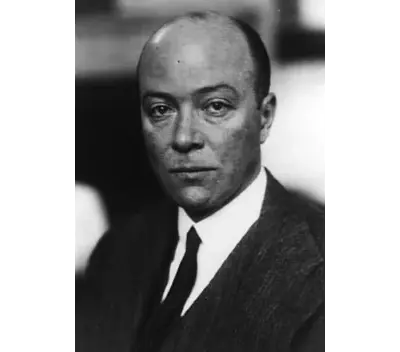
William Christian Bullitt Jr. was an American diplomat, journalist, and novelist. He is known for his special mission to negotiate with Lenin on behalf of the Paris Peace Conference, often recalled as a missed opportunity to normalize relations with the Bolsheviks. He was also the first U.S. ambassador to the Soviet Union and the U.S. ambassador to France during World War II. In his youth, he was considered a radical, but he later became an outspoken anticommunist.
