Aristides de Sousa Mendes Quotes
I will not condone murder, therefore I disobey and continue to disobey Salazar [Dictator of Portugal]. My desire is to be with God against men, rather than with men against God., If thousands of Jews can suffer because of one Catholic [Hitler], then surely it is permitted for one Catholic to suffer for so many Jews. I could not have acted otherwise, and I therefore accept all that has befallen me with love.
During WWII, he ignored and defied the orders of his own government to issue no visas for the safety of war refugees fleeing from invading German military forces in the early years of World War II. Between June 16 and June 23, 1940, he frantically issued Portuguese visas free of charge, to over 30,000 refugees seeking to escape the Nazi terror, 12,000 of whom were Jews who were thus saved from murder. He was fired by the Portuguese dictator and spent the remainder of his life in disgrace and poverty. In 1966 Sousa Mendes was honored at Israel's Yad Vashem memorial to the Holocaust as one of the "Righteous Among The Nations," Also in 1987, the Portuguese Republic began to rehabilitate Sousa Mendes' memory and granted a posthumous Order of Liberty medal,
Aristides de Sousa Mendes, 1885–1954, Portuguese Diplomat, Quoted in Wikiquotes
Sourced by: Eigen's Political and Historical Quotations

There were millions of refugees in Europe trying to escape the Nazi’s. When France fell and collaborators established the Vishey government, the French began rounding up Jews, Gypsies, and others for the concentration camps. They could escape France only if they had a transit visa from some nearby country. Salizar, the Portuguese strongman, currying favor with Hitler, prohibited the issuance of transit visas to Jewish refugees. Some unethical diplomats would only issue visas if large bribes were paid. Sousa Mendes, a devout Catholic, had seen all the desperate refugees in the streets of Bordeaux and decided to issue transit visas despite his government’s orders. He issued 30,000 taking no payments at all and saved tens of thousands of lives. Salizar investigated and demanded an explanation. Sousa Mendez was fired and was not even allowed to practice law. He died in poverty. Later he was posthumously awarded his country’s highest medal and a stamp was issued in his honor. See {67378}.


Saint Benedicta was born and brought up as a Jew and converted to Catholicism. She and a few other leading German Catholics spoke out forcefully against Nazi crimes and immoralities. She was one of the few German Catholics who wanted the Pope to act more forcefully in Germany. The most controversial aspect of the Pontificate of Pius XI was his relative silence and failure to use the powers of the church and excommunication to condemn and control the Nazi rise to power and their, aggression, discrimination, and atrocities including mass murders. The Pope did occasionally speak out condemning the worst of the German Nazi outrages to morality, but he did not do so very vigorously or order the German Cardinals and other bishops to do so. Supporters of Pius XI point out that the entire Catholic Church in Germany was in peril. The Nazis might have shut down their churches, jailed or murdered priests and seize church property. Many of the German Catholics, including the clergy, were Nazi party members or supporters, and he feared a political schism of German Catholics as well. And Italy, surrounding the Vatican was then under the control of the Italian Fascists who were allies of the Nazis, The Vatican itself and its staff were themselves vulnerable and could have been easily occupied. Apologists for Pius XI observe that the entire Church and its leadership could have been wiped out had they ignored the practicality that the Fascists were in control and would tolerate the Church just so far. Saint Teresa and other Catholics who were outspoken, along with the few Protestant Lutheran Clerics who opposed the Nazis, were indeed arrested and Saint Teresa was finally murdered at the Auschwitz concentration camp. Even that did not galvanize Pope Pius XI to assertive anti Nazi action. The records of the Vatican for that period have not been opened for public study so it is not known for sure that the Pope even saw Saint Teresa’s letter or it was intercepted by the strong pro Nazi faction in the Vatican. That year, Pius signed a Concordat (agreement) with the Nazi Government which many in the Vatican naively believed would control and limit the worst of the Nazi actions. But by 1937, Pius condemned the “violations” of the Concordat and Nazi anti-Semitism as well (encyclical written in German, Mit brennender Sorge (With Burning Anxiety). His critics observe that he went no further, even with the Catholic Nazi clerics and other Catholics. The Carmelite order tried to protect Saint Teresa who was then just a non and leading Catholic intellectual (she had a PhD in philosophy) by sending her to a Carmelite facility in Holland. But the Germans overran the Netherlands, arrested her and sent her to Auschwitz where she was martyred. She was beatified by Pope John Paul II in 1987.

Schindler was a very wealthy industrialist who risked his own life and kept over 1000 Jews from being sent to the gas chambers during the Holocaust. Yad Vashem’s, Israel’s Memorial of the Holocaust has a duty to convey the gratitude of the State of Israel and the Jewish people to non-Jews who risked their lives to save Jews during the Holocaust. This mission was defined by the law establishing Yad Vashem, and in 1963 the Remembrance Authority embarked upon a worldwide project to grant the title of Righteous Among the Nations to the few who helped Jews in the darkest time in their history.

It is amazing what explanations religious and biased fanatics can come up with to explain history.


The Nazis and most of the Arabs were allies in WWII. The Jews of Palestine—although they were opposed to many of the British policies regarding Palestine—were active in the Allied cause contributing units to the British Army. Although the Germans were brutal to civilians, murdering millions, they refrained from public pronouncements or exhortations to kill civilians in most cases. The Arabs did not. The Mufti was actually given the rank of General in the Nazi SS and had his own SS unit. In this despicable exhortation he actually uses a concept and wording from the Koran. See {584355}. This quotation is important in that it refutes a common claim by some Palestinians that it was only the Germans who were responsible for the Holocaust and the post war Jewish Refugee problem and that the Palestinians had to bear the price rather than place Israel in Europe. This quotation and the other by the Grand Mufti prove that Palestinians were not only complicit in persecution of Jews but took a leadership and advocacy role.
This was the first day of WWII and Hitler’s armies seemed invincible. Kaplan was one of the few who at that time predicted allied victory. He was not even wrong about his own fate. He and the vast majority of the Jews in the Warsaw ghetto never survived.


Cooper had resigned from the government after Prime Minister Neville Chamberlain returned from his meeting with Hitler with the naïve view that peace could be made with Germany. There was a significant pro-Fascist, Nazi sympathetic segment of British society including the former King, the Duke of Winsdor, who were in favor of making an alliance with Hitler and not opposing the Nazi “reform” of Europe. Surrender was his word for their alternative.

Chvalkovsky had just returned from Berlin where he had met with Hitler and German Foreign Minister Ribbentrop. He related the meeting to the French Ambassador who reported it to the French Foreign Minister by letter.

The then Attorney General had established a back channel to the Russian agent. There was genuine fear by the Russians and some in America that there were still many Nazis and German nationalists who would try and influence, if not take over, German politics to produce another aggressive German fascist state. The Russians had lost 22 million citizens to the Germans in the war and had faced a defeated Germany where virtually every German over the age of 30 had been cheering for and supporting Hitler a decade ago. Neither the Russians nor we and the other allies had not yet seen the remarkable turn-around that the German nation would make and the intense anti-fascist, non-military ethos that would be brought by the younger German generations. The direction of Germany was then very unpredictable.

Dodd, in Berlin from 1933 to the onset of WWII, was able to see first hand what Hitler and the Nazi Movement was really like, Although he for the United States and Churchill for England warned early on, the politics of the times would not allow any action to stop or curtail Hitler. America, in particular, had a strong isolationist Republican wing and in addition, a small but loud core of pro Fascist, Hitler admirers such as Charles Lindburg, Father Coughlin, and Henry Ford. America had virtually no serious military capacity at the time, and with the Depression, FDR had all he could do to just gradually build up the military. By the time the Democracies realized that Dodd and Churchill were right, it was too late to prevent WWII. Dodd died in 1940 just when it was clear that he had been right.

He was shot in 1944 for his involvement in an attempt to kill Hitler


Many German officials, after the war, tried to justify the Concentration Camps. However, the argument has little historical merit as by the time the Nazis implemented them, they had complete control of the country and were in no danger of Civil War. And certainly the torture, medical experiments, and murders were not required to prevent civil strife. And using inmates as slave laborers in Donitz’s shipyards had nothing to do with civil war. After the war Donitz was found guilty of Unrestricted Submarine Warfare and using thousands of slave laborers in his shipyards. He was sentenced to 10 years, one of the lightest sentences if the German War Crimes Trials. He himself was not only an enthusiast about the concentration camps but was a murderous anti-Semite as well. See {624978}. The thought that the Germans had to kill little children to avoid civil war is as absurd as any argument could be.

The historical record that is available shows that while the Pope did not, actively or aggressively oppose Hitler, and he did not discipline Catholic prelates who were Nazi supporters, there is no specific evidence that shows the Pope conspired with Hitler, about the extermination of Jews or anything else. However, most of the relevant documents of the era are in the Vatican and the records have been sealed and have not been visible to historians. Apologists for the Pope’s passivity point out that a large percentage of Germans were Catholic and he had a duty to not antagonize Hitler who would retaliate against German Catholics and the German Catholic clergy and church property. Further, Fascist Italy was under Hitler’s control, and the Vatican itself could have closed and its property seized. The historical record is still very vague.

Auschwitz was the worst of the German Nazi WWII Death Camps where over 2 million people were murdered.
Saint Benedicta was born and brought up as a Jew and converted to Catholicism. She and a few other leading German Catholics spoke out forcefully against Nazi crimes and immoralities. She was one of the few German Catholics who wanted the Pope to act more forcefully in Germany.

She had saved over 2000 Jewish Children in the Warsaw Ghetto from Death by the Nazis. As a member of the Polish Resistance, she was caught be the Germans, badly tortured, and sentenced to death which she narrowly escaped.
She was found guilty of treason because she had passed out leaflets criticizing the Nazi regime on a university campus. The non violent resistance tactics were so threatening to the Nazi German regime that Sophia and other members were executed by guillotine beheading as a particularly harsh example. The graphic is a postage stamp that Germany has issued in her honor.
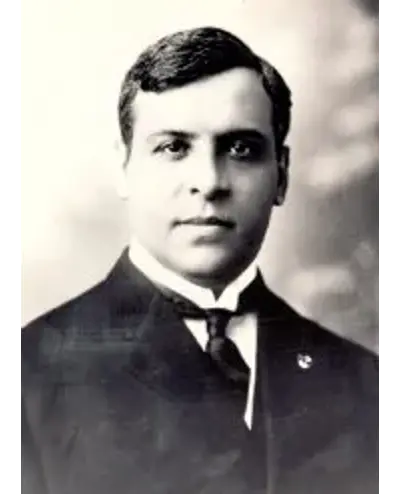
Aristides de Sousa Mendes do Amaral e Abranches (Portuguese pronunciation: [ɐɾiʃˈtiðɨʒ ðɨ ˈsowzɐ ˈmẽdɨʃ]) GCC, OL was a Portuguese consul during World War II.
