Alija Izetbegovic Quotes
Nothing which can make the world a better place can be rejected out of hand as non-Islamic... In order to be Islamic, a solution must fulfill two conditions: it must be maximally efficient and maximally humane.
Unfortunately, the vast majority of Islamic clergy would not agree with his definition. Some of the Islamic modernists share his view, but there are relatively few of them in the Muslim counties and most reside in the West.
Alija Izetbegovic, 1925–2003, President of Bosnia, The Islamic Declaration, 1970
Sourced by: Eigen's Political and Historical Quotations


Abdul Rahman had converted from Islam to Christianity 16 years before. Conversion from Islam is a capital crime under Sharia Law. Rahman was charged but the judge demonstrating the tolerance of Islamic law said that Rahman would be given an opportunity to change his mind and re-embrace Islam and if he did so, he would be converted and not killed.

Or Moslems are of one body…. Assist your brother Moslem, whether he be an oppressor or an oppressed.
The new his Islamic concept is it the heart of much of the ambivalence that Muslims have for others and that many non-Islamic nations have for Islam. Normally Mohammed was very insistent are not tolerating oppression. However it is this passage which for many Muslims justifies their support of terrorists and other malevolent forces so long as they are brother Muslims. Counter pressure which exists in other religious groups is there by diminished with Islam. Essentially this is the religious equivalent of “my country right or wrong”. The first sentence of the quotation is one of the main reasons that Islam is viewed by most Muslims as super national. It represents the first and most important identity for a Muslim in contrast to country or even family.
This phrase has been used by fundamentalists to justify forced conversion and the imposition of religious law—Sharia—on believers and unbelievers alike. The logic is that if God says believing orthodox Mosems are the best, that is what he wants for all. And therefore by forcing others to be orthodox and of the faith, one is doing God’s bidding. See Husain Haqqani, “Islam’s Medeval Outposts,” Foreign Policy November/December, 2002.
Turkey under its great leader, Ataturk, underwent a major cultural revolution. Although Turkey is overwhelmingly Muslim, its constitution provides that it be a secular state with compulsory public non-sectarian education. They adopted a European style law and prohibited Sharia (Islamic law). The nation thrived as no other Muslim country has. Muslims, the world over, are divided on Turkey. For this Sheikh its secular government is an insult to Islam because there is complete separation of mosque and state. For others it is the model which all Muslim countries should emulate.

Religious and ethnic political conflict had broken out in Fiji. Some in the Christian majority strove to make Fiji officially a “Christian country” and marginalize the Indian Hindu minority. The archbishop opposed and thwarted them.


This statement was made in the aftermath of 9-11. However, three years earlier, at a Hamas meeting, the Cleric did not seem to be concerned about the lives of the innocent. See {617372}.


This quotation was used by Aga Kahn III in his famous speech to the League of Nations, October 6, 1937. It speaks of the unity of the Muslims, Jews and Christians from an Islamic scholar of the 13th Century.
This is not terribly different however from Christians and Jews selectively quoting the Bible.

This is a particularly noteworthy quotation as Muslims are often accused of intolerance and here is a Muslim who argues that it is the responsibility of religious leaders to present religion in a tolerant manner.


The Islamic leadership of that era came from the East and not Arabia. Theirs was a much more modern form of Islam where the basic values were very similar to those of other major religions. Also, toleration of minorities was an assumed requirement for all. When the axis of world Islamic leadership shifted to the Arab nations, the fundamentalist intolerance ascended and minorities were not only persecuted but were expelled from Arab countries in an effective ethnic cleansing. “Mussalman” was a then common word used in India to denote a Muslim.

He was the first American that who was assassinated by the Central Intelligence Agency by means of a drone attack. He was a major recruiter for Al Qaeda and he preached to 3 of the 9-11 terrorists.


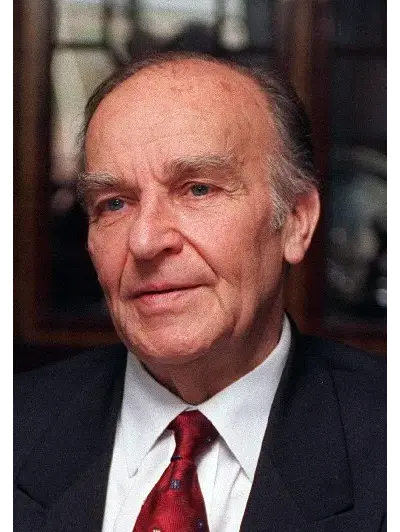
Alija Izetbegović was a Bosnian politician, lawyer, Islamic philosopher and author, who in 1992 became the first president of the Presidency of the newly independent Republic of Bosnia and Herzegovina. He served in this role until 1996, when he became a member of the Presidency of Bosnia and Herzegovina, serving until 2000.
