Carroll Quigley Quotes
No slave system has ever been able to continue to function on the slaves provided by its own biological reproduction because the rate of human reproduction is too slow and the expense from infant mortality and years of unproductive upkeep of the young make this prohibitively expensive. This relationship is one of the basic causes of the American Civil War, and was even more significant in destroying ancient Rome.
Quigley, Carroll. The Evolution of Civilizations: An Introduction to Historical Analysis. Macmillan, 1961, p. 199.

Ruffin is more widely known as the man who fired the first shot of the Civil War.


The perception of the necessity of slavery was evident very early in the South.

Most of us think the California was not a slave state, but in the early 1850s the California law (such as it was) allowed a slave owner to “sojourn” in California with his property that could include slaves. A number of Southern save owners took slaves to the California gold fields to do mining. There was a great deal of resentment on the part of the other miners and the free labor of the territory. In 1855, slavery in California was abolished.

The cotton industry and slavery were a very important part of the economy of Providence, RI. The Rhode Island cotton mills were supplied by Southern cotton produced by slaves and carried from the South on Rhode Island ships. Many of the southern slaves were kidnapped from Africa from Rhode Island slave trading ships. When the slave trade was made illegal, Brown was the first slave trader prosecuted. His brother, Moses Brown, a vehement abolitionist was one of the men who brought the prosecution.
depending on the term of the sentence Many criminals in England were sentenced to indentured servitude in America for a number of years depending on the crime.


The first anti-slavery newspaper published in the United States & the first journal in America to advocate immediate, unconditional emancipation

This objection to capital punishment is an economic one. The colonies needed labor badly. Petty argued that if a criminal were executed the society would lose 1 laborer whereas if he were made a slave, then 1 laborer will be gained. Note that his assumption, typical of the times, that a rich thief would pay a fine but a poor one be executed.


Jefferson had calculated that if he allowed slaves to “breed”, he could realize a profit of 4% a year just from the increase of the number of slaves he owned. He recommended the business of breeding slaves to several people, and at this time showed no moral compunction about slavery.
The Southeastern states were in a triple bind regarding slavery. The slave trade was ended so new slaves could not be imported. The existing slaves commanded much higher prices in the West and were sold to those destinations. Meanwhile, the European abject poverty provided a ready source of immigrants who would work for wages that were not much more than the cost of keeping and amortizing a slave. At the beginning of the Civil War, the death knell of Southeastern slavery had already been ringing.


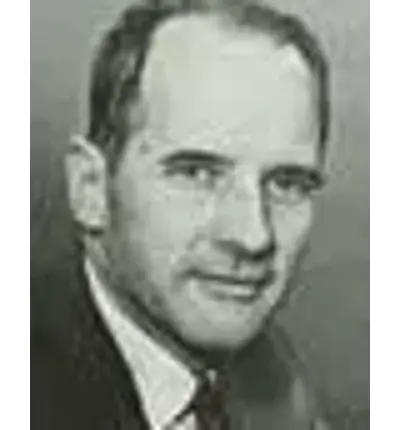
Carroll Quigley was an American historian and theorist of the evolution of civilizations. He is remembered for his teaching work as a professor at Georgetown University, and for his writing about global conspiracies, in which he argued that an Anglo-American banking elite have worked together for centuries to spread certain values globally.
