Frederick Law Olmsted Quotes
This is just what I have thought when I have seen slaves at work - they seem to go through the motions of labor without putting strength into them. They keep their powers in reserve for their own use at night, perhaps.
Frederick Law Olmsted, A Journey in the Seaboard Slave States, 1856
Sourced by: Eigen's Political and Historical Quotations


Ruffin is more widely known as the man who fired the first shot of the Civil War.


Abd al-Rahman Ibn Mohammad. He is generally regarded to be the World’s first social scientist. The largest statue in Tunisia of not of a military leader of king, but of this social scientist.

This was written under the name of Ragnar Redbeard. There are a few scholars who believe that it was written by Jack London, but most credit Desmond.

This is one of the major reasons that Slavery was so hard to end in the South. At the time, the dollar value of the Southern slaves was greater than the value of all the land, factories, inventory, and capital equipment of the South. Slaves were not only capital, they were the largest component of Southern capital and Southern wealth. There were numerous ideas of paying slave owners for the freedom of their slaves, and if this was done, it would have been far less expensive in money alone than the Civil War cost. However, the Southern leadership, like Fitzhugh, were totally intransient with culture and customs—indeed the Southern concept of manhood—was dependent in Slavery. The result was that no compensation was paid to slave owners and the South was impoverished as a result of its capital loss and it would not recover for 150 years.


Referring to the Arawak natives he found when he landed in the "new world—San Salvador:"


Referring to Black Congressman Julian Bond: Louis Eugene Walcott


The Ndebele were a warrior caste that had captured the land of the Shona and enslaved them. When the whites came there was antipathy to the Ndebele and great fear that they would have to farm and do manual labor, things which they had always required their slaves to do. At the same time the king was a vicious despot who killed many of his subjects at his whim and who was resented even by the Ndebele. The king took poison rather than be captured by the whites. Ironically, the king anticipated the great dissatisfaction of the Ndebele when they could no longer own slaves and had to do their own manual labor.
The white skilled laborers of the North were not the only ones who found slavery deleterious to their economic well being. The complaints to the Carolina legislature produced a finding as early as 1744 that whites were adversely affected.

Indian and Black slaves were outlawed very early in Connecticut, not on moral grounds of concern for the Indians and Blacks, but because of the negative effects on the white poor. Why would anyone pay the poor any more than the amortization costs of a slave? Therefore there was no way a poor white could make a living wage if slavery were to coexist.

Miller was the first Black American admitted to a Graduate Program—Johns Hopkins—in Mathematics

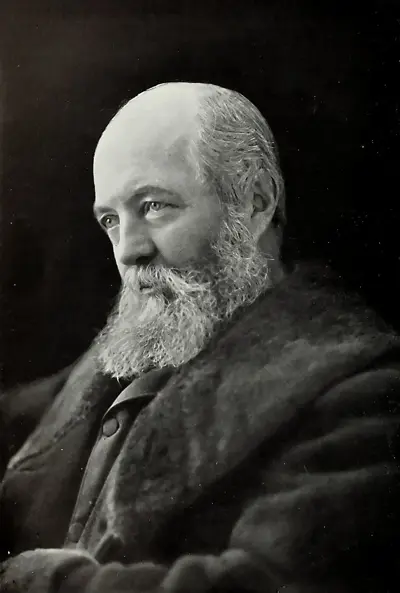
Frederick Law Olmsted was an American landscape architect, journalist, social critic, and public administrator. He was the father of American landscape architecture. Olmsted was famous for co-designing many well-known urban parks with his senior partner Calvert Vaux. One of Olmsted's early works included designing the Walnut Hill Park in New Britain, Connecticut. His later efforts included Central Park and Prospect Park in New York City and Cadwalader Park in Trenton. He headed the pre-eminent landscape architecture and planning consultancy of late nineteenth-century America, which was carried on and expanded by his sons, Frederick Jr and John C, under the name Olmsted Brothers.
