Tiberius Quotes
No single man can bear the whole burden of Empire — I need a colleague, or perhaps several colleagues
This is an unusual statement for an Emperor to make, but Tiberius was a very unusual Emperor. Most modern politicians would admit this obvious truism in any complex society.
Tiberius Julius Caesar Augustus, 42 BC–37 AD, Tiberius, Roman General & 2nd Roman Emperor, Statement to the Senate, Quoted in Suetonius, The Twelve Caesars
Sourced by: Eigen's Political and Historical Quotations


In 1917 the very popular governor was impeached and convicted for misappropriation of public funds. Under Texas law he was precluded from elected office thereafter. In 1924 his wife, Amanda Wallace Furguson, announced her candidacy for the Texas governorship. Critics claimed this was a transparent attempt for Jim Furguson to regain his former power. He not only didn't deny this but made the most of it. The "two governors" won.

When Augustus first achieved power, he shared it with Marc Antony and Marcus Aemilius Lepidus in a military dictatorship known as the Second Triumvirate. Augustus was the most influential of the 3, and he eventually pushed the other two out and ruled alone as Emperor.
The Romans had experimented with two leaders where each day command shifted from one to the other. It did not work very well and was not continued. Instead the Western world has moved toward a singular leader with very limited powers and many checks and balances plus the possibility of removal.


“Father of American Anthropology”


After the King’s appointment in 1921 she “advised” him on establishing this regime and operating the government. At a time that women could not even vote in England, Bell was a kingmaker and major power in an area of the world that was much more sexist than England at the time.

From this quotation, {624648} and {615901} it is clear that the framers of the Constitution intended the treaty making powers to be shared by the President and the Senate. In practice, in modern times treaties are usually initially negotiated by diplomats under the supervision of the President and the Senate gets to concur or not in the ratification process. However, there have been a number of treaty failures including the League of Nations where the lack of coordination has resulted in a situation where the Senate had to accept or reject something which the President had negotiated and the Senate rejected the treaty.

Indeed she did. In actuality, she was the ruler of the largest nation on Earth. However, she was not a very clever ruler and actually was responsible for keeping China very backward and weak because she was convinced that China was the most advanced of nations and very strong. Therefore nothing should be changed. Over 5 decades with no change is sure to make a nation backward, even if it started as advanced. See {620090}.

At the time there was no concept of serious separation of powers. For all practical purposes, the King ruled and he shared some of his powers with the Parliament. The next centuries in England would see the great battle for governmental power between the monarch and the Parliament. Today, the British monarch has no power but still retains a great deal of influence in England but largely because Queen Elisabeth is so well loved and respected.

This was an amazing statement for an all powerful Roman Emperor. Few national leaders—even in democracies would go this far. In early America, some Presidents had this attitude and saw themselves as servants of the Congress to a great extent. Over time, the power of the Congress diminshed and that of the Presidency grew, and no modern president considered himself the servant of the Congress.


The offer of Darius was to pay him ten thousand talents, to cede to him all the countries west of the Euphrates, and to give him his daughter in marriage. Parmenio had urged him to take the offer. Alexander then went on and defeat Darius and the Persions who far outnumbered his forces. Asia then had one king who was more popular than Darius had been.

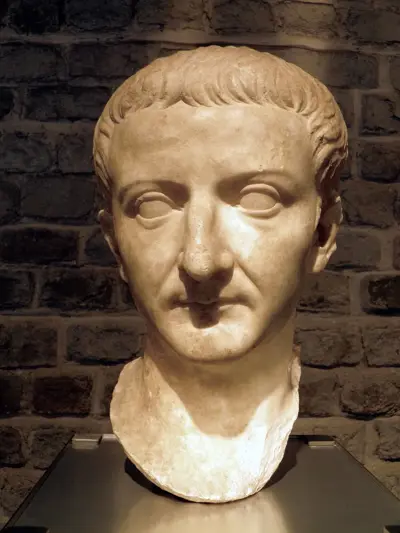
Tiberius Caesar Augustus was the second Roman emperor, reigning from AD 14 to 37. He succeeded his stepfather, Augustus.
