Eleanor Roosevelt Quotes
My husband [Franklin Delano Roosevelt] always said the President of the United States had the best information in the world on which to base the government's decisions as to policy in foreign relations. Part of this was because of the efficiency of the intelligence reports he received. Over the past few years, however, the CIA has become an agency not for gathering information and reporting it to those who make policy and take action, but it has itself made policy and taken action. And by so doing it has involved the government in situations from which no administration could quickly extricate itself.
The CIA did not have a long tradition. It was created after WWII when the OSS was are espionage organization had been disbanded In the early days of the Cold War, the CIA went rogue and engaged in covert activities without the knowledge and approval of the President and his cabinet. General Maxwell Taylor conducted a thorough investigation and the agency was brought under control. There hav been several more incidents since then and every few years there have been additional scandals of unauthorized operations which were harmful to American interests and values. In a democracy it is always hard to control a secret organization. Actually, at the beginning of WWII, we had almost no espionage capability and President Roosevelt had a series of friends who provided him with intelligence until William Donavan had time to establish the OSS which did such a wonderful job.
Eleanor Roosevelt, 1884-1962, First Lady (Franklin Delano Roosevelt), U. S. Delegate to the United Nations, Newspaper Column, My Day, June 2, 1961
Sourced by: Eigen's Political and Historical Quotations


Most of the successful intelligence agency administrators think that Cheney and some others are absolutely wrong that there should not be any discussion. There are times, of course, where secrecy is critical, but that does not mean that there cannot be classified discussion and coordination. Almost every one of the disastrous intelligence agency fiascos, could have been avoided if there were more and wider discussion in the planning. In many cases, Chaney, William Casey and others who hold their view prefer no discussions is that lawyers cannot block the operation on grounds of illegality. Or other agencies cannot get their priorities into the mix. If the NSA had discussed their plan to hack into the telephone calls of our most important allies with the State Department, the plan might not have gone through or if it had, the President would have been consulted. The Bay of Pigs was based on a set of assumptions that were not true and our government had a number of experts who could have debunked the assumptions the CIA planners were counting on which did not pan out.


even though in this case the objective The State Department, the Defense Department and most important President Kennedy had decided to get rid of Diem. Most of the Central Intelligence Agency thought that this was a very unwise policy, because Diem was a known risk, and the people who would replace him and their talents and policies were unknown. The negatives of Diem—the facts that he, a Christian, was persecuting the majority Buddhists, was totally corrupt, and not a very good leader was less distressful to the CIA than to the President and the other agencies as the intelligence agency frequently not only tolerated “offensive” allies, but actually employed them including war criminals. Another importance of this quotation is that it shows that it was by no means certain that the CIA would always follow the orders of the President and the government policy makers. Colby, who was not the agency director at that time but was the head of the South East Bureau, was one high level official who argued that the policies should always be followed even if they were unwise or foolish. Another importance of this quotation is that it illustrate a common error that administrations are frequently forced to make: making a policy decision to eliminate a problem while not having much of an idea of what the alternative or consequence would be when the policy is implemented. The Syrian Civil War in 2013 was a good example. The Government side appeared to have used Chemical Warfare on Civilians and public opinion demanded that we do something. However, having a no-fly zone or any of the alternatives to prevent (punish) the government for the Chemical Warfare would strengthen the rebel side which was made up of numerous factions—some of which were known Islamic fundamentalist terrorists and jihadists. If the balance of power were tipped toward the rebels, the consequence for the American national interests were unknown—just as the consequence of ousting Diem was unknown and turned out to also be bad and was probably worse.


Precursor to CIA. During WWII Donovan’s OSS, the FBI and the State Department had the three civilian intelligence organizations while each of the 4 Armed Services had their own intelligence services. Rarely did any of these 7 organizations communicate with any of the others. In the case of the OSS, the FBI and the military services tended to try and obstruct many of their operations. This was the first call for what became the CIA.


Senator Church was the chairman of the committee. It’s reports (14 in all) are the most extensive documentation of U. S. intelligence ever compiled.


Agree resigned from the CIA in protest to its political position.


His concern was well placed. For over half a century thereafter, the tail did wag the dog, and while there have been many successful covert operations, the risk and current pressure siphoned off talent and management attention from intelligence—the Central Intelligence Agency’s primary job.


The Central Intelligence Agency had a hand in the assassination having smuggled in the weapons. However, the government takeover plan did not go as expected and there was no clear alternative plan to go to.

See {634917} for a recent example of lying under oath to the Senate.
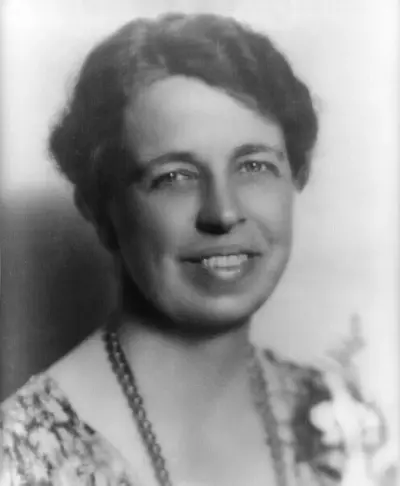
Anna Eleanor Roosevelt was an American political figure, diplomat and activist. She served as the First Lady of the United States from March 4, 1933, to April 12, 1945, during her husband President Franklin D. Roosevelt's four terms in office, making her the longest-serving First Lady of the United States. Roosevelt served as United States Delegate to the United Nations General Assembly from 1945 to 1952. President Harry S. Truman later called her the "First Lady of the World" in tribute to her human rights achievements.
