Clarence J. Brown Quotes
I am very much interested in seeing the United States have as fine a foreign military and naval intelligence as they can possibly have, but I am not interested in setting up here in the United States any particular agency under any President ... and just allow him to have a Gestapo of his own if he wants to have it.
Clarence J. Brown, 1893-1965, U. S. Congressman (Republican, OH), Congressional hearings, April 25, 1947
Sourced by: Eigen's Political and Historical Quotations


The CIA did not have a long tradition. It was created after WWII when the OSS was are espionage organization had been disbanded In the early days of the Cold War, the CIA went rogue and engaged in covert activities without the knowledge and approval of the President and his cabinet. General Maxwell Taylor conducted a thorough investigation and the agency was brought under control. There hav been several more incidents since then and every few years there have been additional scandals of unauthorized operations which were harmful to American interests and values. In a democracy it is always hard to control a secret organization. Actually, at the beginning of WWII, we had almost no espionage capability and President Roosevelt had a series of friends who provided him with intelligence until William Donavan had time to establish the OSS which did such a wonderful job.


about Iraq possessing weapons or mass destruction This is the one of the kind of statements which many felt were prevarications to justify the President’s desire to invade Iraq. See {618461} for an example of the reaction that was generated.


Precursor to CIA. During WWII Donovan’s OSS, the FBI and the State Department had the three civilian intelligence organizations while each of the 4 Armed Services had their own intelligence services. Rarely did any of these 7 organizations communicate with any of the others. In the case of the OSS, the FBI and the military services tended to try and obstruct many of their operations. This was the first call for what became the CIA.


Expressing concern over President Obama extending some of the American citizen entitled privacy rights to foreigners. He was concerned that this might inhibit our spying efforts.

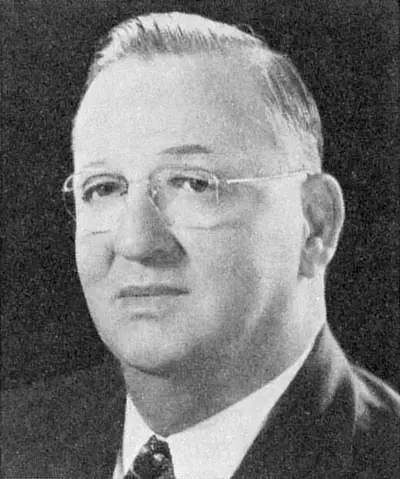
Clarence John Brown Sr. was an American newspaper publisher and politician; he represented Ohio as a Republican in the United States House of Representatives from 1939 until his death in Bethesda, Maryland in 1965. Long representing conservative views, near the end of his life, he helped gain passage of the Voting Rights Act of 1965 and voted for its passage, which provided enforcement of the right to vote for all citizens, while also voting in favor of the Civil Rights Acts of 1957, 1960, and 1964.
