Lawrence Lessig Quotes
Monopolies are not justified by theory; they should be permitted only when justified by facts. If there is no solid basis for extending a certain monopoly protection, then we should not extend that protection. This does not mean that every copyright must prove its value initially. That would be a far too cumbersome system of control. But it does mean that every system or category of copyright or patent should prove its worth. Before the monopoly should be permitted, there must be reason to believe it will do some good — for society, and not just for monopoly holders.
Lawrence Lessig, Founder of Stanford University Center for Internet and Society, Founder and chairman of the Creative Commons, May the Source Be With You, 2001
Sourced by: Eigen's Political and Historical Quotations


Note that the only reason given in the constitution for protecting intellectual property was to promote the progress of science and useful arts. Inventors, would keep secret their inventions and techniques of manufacture and use in order to protect their economic interests. No one else would be able to benefit by understanding the invention and taking it further and increasing knowledge and understanding. So the Founding Fathers told Congress to establish a system where inventors would get a guarantee of a reasonable time to profit exclusively from the invention in exchange for making the invention public. The plans, methods and drawings had to be made public and until the 20th century a model of an invention had to be supplied to the Patent Office. Anyone could get an inexpensive copy of any patent and come and study the models. Today, most people believe that the reason for a patent system is to protect the intellectual property of the inventor, but that was not a purpose or even a serious consideration. The reason however was educational and to demystify technology and produce more science and technology which it did.


When Secretary of State, Jefferson ran the first American Patent Office. The Patent system was originally and educational program, not an intellectual property program. Inventors would keep all their technological secrets to themselves. The idea behind the original patent system was to give an inventor a limited monopoly on profiting from his invention in exchange for sharing his information and techniques with his countrymen—thus improving the technological competency of the entire society. The very first patents were available for public inspection for that reason. And even today, copies of patents are available easily for almost no cost. And few American ideas worked as well as our early patent system. Through its educational role and technology transfer, America came from technological nowhere to being the pre-eminent inventing nation of the world. The balance between public access to invention and innovation and preservation of some rights to the creator of intellectual property is key to modern development.

Getting agreement of different nations on copyright protection has always been a problem.

This doctrine of law was settled, but in the technological and digital age some people have tried to extend the intellectual property doctrine to include some ideas if they idea is a procedure or a set of DNA instructions. Meanwhile, the legal doctrine has been and is, as stated by Brandeis in this quotation, is that new and original ideas are not intellectual property and are always in the public domain, no matter how original.

Vladimir Lenin. After the Russian Revolution the Soviet State rejected the use of a copyright and patent system with the notion that all intellectual property belonged to the state. According to some political economic theorists, this would portend great difficulty in obtaining innovative and creative output in the arts, industry, and sciences. However, in the next 50 years, Russia went from a backward nation to one of the most scientifically sophisticated in the world and their creative arts output, quality and quantity was second to none. They did not fare as well in consumer technology although their military technology was very powerful and all the more amazing considering where they were in 1918 when the Russians adopted these policies. The issue of whether artists, scientists, and inventors need exclusive control of their output in order to be motivated to create has been in dispute for years.

He appears to be the first person to understand and write this important economic principle about science. Even in the 21st century, many economists are not aware of this critical principle.


This would seem a much easier solution to the problem of monopoly holders charging outrageous prices than trying to fix profits or lay a large tax on the profits. However, few governments ever do this. In many cases the patent holders control or heavily influence the government. There is in addition, in most Judeo-Christian societies an assumption that most people have a moral sense and will not take undue advantage of customers just because they have the power to do so. And in the most egregious cases of monopoly pricing there were many other patents where the inventors were not gouging the consumers. It is always been the minority of businesses that have taken gross advantage of patent monopolies. However at some periods, where there was an oligarchy, all the companies in an area abused their patent monopolies together. An example would be the pharmaceutical industry of the early 21st century.

1st Baron Macaulay. The speech was in opposition to the extension of copyright to 60 years after the death of the author. The American Congress in the Digital Millennium Copyright Act did not take his advice and extended the time to 100 years. This was a radical change from the practice of our Founding Fathers who did not allow copyrights at all. America did not join the copyright convention until the 19th century and then for a far shorter period. When corporations started accumulating intellectual property, they made political contributions and hired lobbyists to increase the period of “evil” so they made windfall profits that were not expected.

This is a very different view from the prevailing American legal and cultural view. The United States grants patents and copyrights even when the taxpayer has paid for much of the research and development, even when the inventor was educated by the state. The difference is an intellectual and philosophical one. America is anxious to incentivize people to create and invent and especially to encourage capital to flow to R&D. Toynbee comes from an intellectual tradition where science and technology was the finest in the world, but it was done by the well-to-do for the sake of doing it. Both approaches had been immensely success for their times, but the need for technological development is so great that we should not limit it to the people of wealth and a social class for whom money may not be a driver while it is for most others.


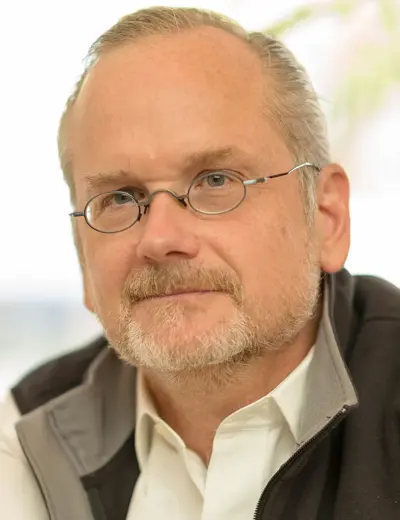
Lester Lawrence Lessig III is an American academic, attorney, and political activist. He is the Roy L. Furman Professor of Law at Harvard Law School and the former director of the Edmond J. Safra Center for Ethics at Harvard University. Lessig was a candidate for the Democratic Party's nomination for president of the United States in the 2016 U.S. presidential election, but withdrew before the primaries.
