Arnold J. Toynbee Quotes
We shall have to share out the fruits of technology among the whole of mankind. The notion that the direct and immediate producers of the fruits of technology have a proprietary right to these fruits will have to be forgotten. After all, who is the producer? Man is a social animal, and the immediate producer has been helped to produce by the whole structure of society, beginning with his own education.
This is a very different view from the prevailing American legal and cultural view. The United States grants patents and copyrights even when the taxpayer has paid for much of the research and development, even when the inventor was educated by the state. The difference is an intellectual and philosophical one. America is anxious to incentivize people to create and invent and especially to encourage capital to flow to R&D. Toynbee comes from an intellectual tradition where science and technology was the finest in the world, but it was done by the well-to-do for the sake of doing it. Both approaches had been immensely success for their times, but the need for technological development is so great that we should not limit it to the people of wealth and a social class for whom money may not be a driver while it is for most others.
Arnold J. Toynbee, 1899-1975, British Historian, Surviving the Future, 1971
Sourced by: Eigen's Political and Historical Quotations

One major purpose of the patent system is to get inventors to disclose their inventions and explain how they work and in exchange they get a temporary monopoly to profit from the invention. That is why all patents are available to the public so that science can advance if all other see how something was done. Despite the Douglas View, gadgets have been patented if they had some novel element to their functioning.

Vladimir Lenin. After the Russian Revolution the Soviet State rejected the use of a copyright and patent system with the notion that all intellectual property belonged to the state. According to some political economic theorists, this would portend great difficulty in obtaining innovative and creative output in the arts, industry, and sciences. However, in the next 50 years, Russia went from a backward nation to one of the most scientifically sophisticated in the world and their creative arts output, quality and quantity was second to none. They did not fare as well in consumer technology although their military technology was very powerful and all the more amazing considering where they were in 1918 when the Russians adopted these policies. The issue of whether artists, scientists, and inventors need exclusive control of their output in order to be motivated to create has been in dispute for years.

Although most people do not realize it, ideas cannot be copyrighted under present and traditional copyright law. The manifestation of the idea, the specific design, words, fonts, and layout can be copyrighted, but someone else can legally use and publish that idea with a different design and words.

Note that the only reason given in the constitution for protecting intellectual property was to promote the progress of science and useful arts. Inventors, would keep secret their inventions and techniques of manufacture and use in order to protect their economic interests. No one else would be able to benefit by understanding the invention and taking it further and increasing knowledge and understanding. So the Founding Fathers told Congress to establish a system where inventors would get a guarantee of a reasonable time to profit exclusively from the invention in exchange for making the invention public. The plans, methods and drawings had to be made public and until the 20th century a model of an invention had to be supplied to the Patent Office. Anyone could get an inexpensive copy of any patent and come and study the models. Today, most people believe that the reason for a patent system is to protect the intellectual property of the inventor, but that was not a purpose or even a serious consideration. The reason however was educational and to demystify technology and produce more science and technology which it did.


Many people believe that patents—especially in the high technology arena—actually inhibit innovation.
The Diggers were a religious-economic movement that even today would be considered very radical. They advocated the right of the poor to go onto public lands and farm them—thus the name “Diggers.” Beyond their opposition to the private ownership of land to the exclusion of the poor, Winstanley and the Diggers promulgated another very modern doctrine: That the poor should take the responsibility and have the right to determinine how the society should provide for the poor. A version of this became one of the Mottos of the Poverty Program of 1964. See {616966}.

There was the beginning of a major debate in the advanced countries over the notion of copyright to protect authors and knowledge being a public property. The solution for America and most nations was to allow copyright protection for the specific expression of the knowledge but not the knowledge itself. You cannot copyright an idea or the laws of science—just the way they are expressed. Therefore all are free to discuss the knowledge and also write about it.

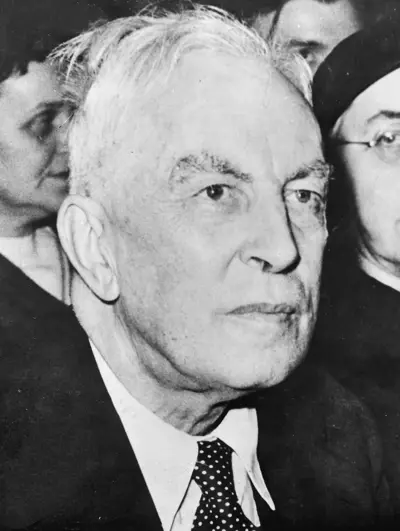
Arnold Joseph Toynbee CH FBA was a British historian, a philosopher of history, an author of numerous books and a research professor of international history at the London School of Economics and King's College London. From 1918 to 1950, Toynbee was considered a leading specialist on international affairs.
